
Edge AI is now infrastructure, not an edge case
Edge AI cuts latency by 100x and slashes cloud costs—here's how to deploy local inference without breaking production.
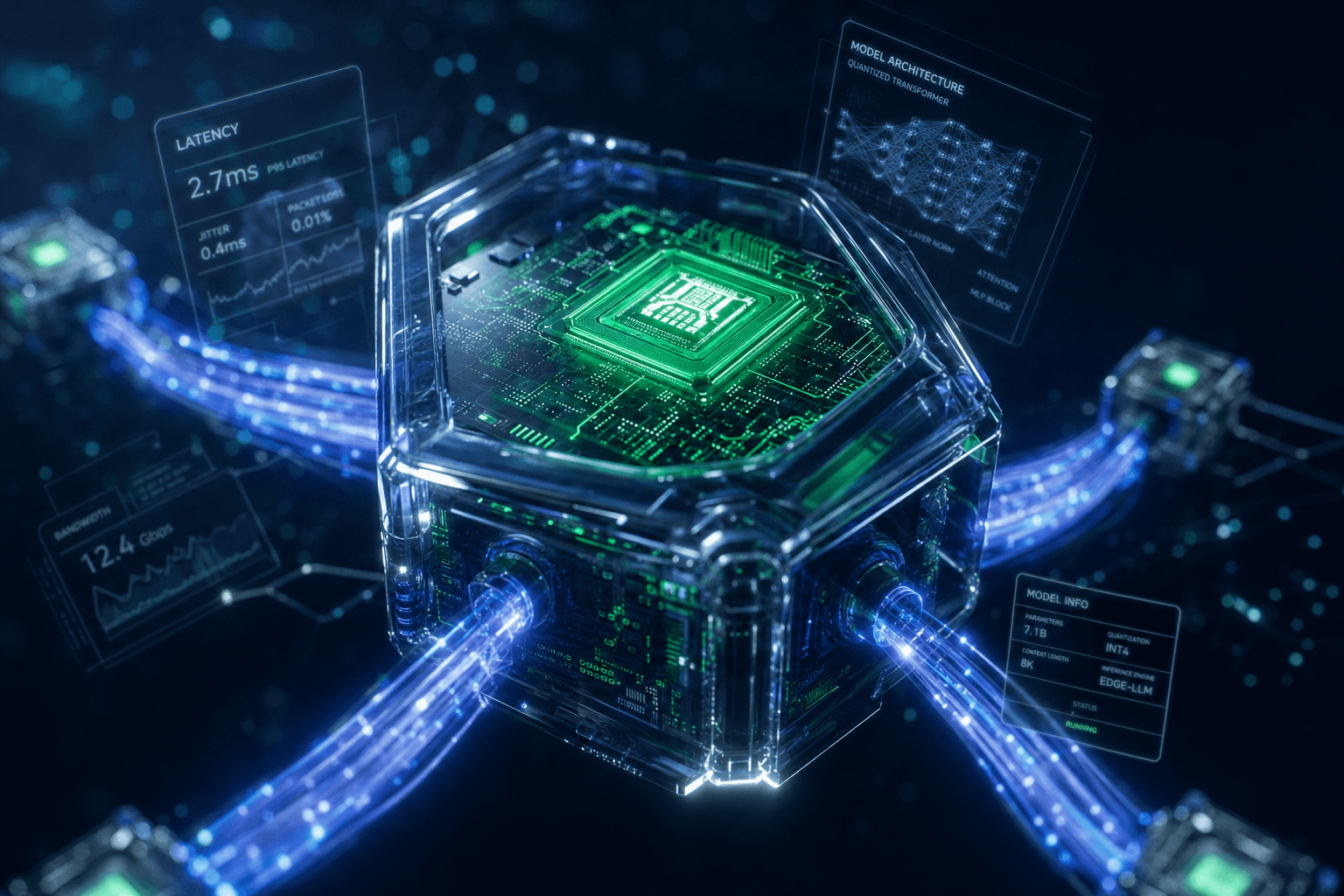
Key Takeaways
- Cloud-centric AI is now the exception. Local inference cuts latency by 10-100x and reduces bandwidth costs by up to 90%.
- Quantisation runs 70B-parameter models on consumer hardware with under 2% accuracy loss. Edge AI moved from research to production standard in 2026.
- Regulatory pressure from GDPR and EU AI Act mandates local data processing. Sending sensitive data to cloud violates compliance requirements that edge deployment solves.
- Production edge deployment requires OTA model updates, version management, and rollback capability. Matching inference requirements to hardware tradeoffs determines operational success.
Edge AI stopped being experimental in 2026. Quantized models now run 70B parameters on consumer hardware, specialized silicon ships at scale, and regulations increasingly mandate local data processing. If you're routing all inference through the cloud, you're paying more, moving slower, and creating compliance risk.
BMW Spartanburg plant processes manufacturing quality control at <50ms latency per unit on local Jetson Orin devices. Walmart reduced bandwidth costs by 90% by processing retail analytics on-edge. If you are still routing all AI inference to the cloud, you are running yesterday's architecture.
The cloud-centric AI model is becoming a liability
Something changed in 2026. Edge AI moved from experimental research to supported production standard. Three forces converged to make this shift inevitable:
Quantization breakthroughs now run 70B-parameter models on consumer hardware with minimal accuracy loss. A Llama 3.1 70B model that requires 80GB of memory in full precision runs in ~20GB quantized, fitting on high-end consumer GPUs.
Specialized edge silicon from NVIDIA, Intel, Google, and Apple reached mature power envelopes (15-30W). The hardware is production-ready, not prototype-grade.
Regulatory pressure — GDPR, EU AI Act, healthcare compliance — now mandates local data processing. Sending patient data to a cloud LLM for diagnostics violates HIPAA. Running inference on-device does not.
The structural insight: Cloud-centric AI is becoming the exception, not the rule. Organizations deploying AI at the edge see 10-100x latency reductions, dramatic cost savings on data transfer, and operational capability in disconnected environments.
Why this matters to your infrastructure now
Manufacturing quality control that would take 200-500ms with cloud round-trips now completes in <50ms locally. Autonomous vehicles with 10-30ms network latency would be unsafe. Tesla's FSD runs 144 TOPS locally as existential architecture, not optimization.
For CTOs and infrastructure leaders, the implication is clear: If you are still sending all inference to the cloud, you are paying more, moving slower, and leaking data unnecessarily.
Edge AI in 2026 is the default architecture for:
- Latency-sensitive applications requiring <100ms response times
- Privacy-regulated environments where data sovereignty is non-negotiable
- Bandwidth-constrained deployments where cloud costs spiral
- Disconnected environments where internet connectivity is unreliable
Delaying adoption is a competitive disadvantage, not a caution.
The four concepts you need to understand
Quantization: Running large models on small hardware
Quantization is the technique that enables large models on small hardware. INT8 quantization reduces a model's memory footprint and computation time by ~4x with typically <2% accuracy loss.
Tools you need: NVIDIA TensorRT, ONNX Runtime, llama.cpp.
A practical example: A Llama 3.1 70B model at FP32 takes 10 seconds per inference on a Jetson Orin NX. Quantized to INT8, it completes in 2.5 seconds.
Edge deployment patterns: Four architectures with different tradeoffs
Fully offline edge: Model runs entirely on-device, no cloud connectivity. Use this for autonomous vehicles, medical devices in operating rooms, or military applications.
Edge-cloud hybrid: Simple inferences run locally; complex queries escalate to cloud. Use this for consumer apps where most queries are simple but occasionally need heavy computation.
Federated edge: Multiple devices train locally and share model updates with a central server. Google Gboard and Apple Siri use this pattern. Preserves privacy while improving model accuracy.
Edge cluster: Multiple edge devices form a local cluster, distributing workloads via Kubernetes (K3s or KubeEdge). Use this for factories, retail chains, or smart city infrastructure.
Hardware landscape: Matching inference to silicon
NVIDIA Jetson Orin Nano (40 TOPS, 8GB RAM, 10-25W) for robotics and drones.
NVIDIA Jetson Orin NX (100 TOPS, 16GB RAM, 10-40W) for industrial automation.
Google Coral TPU (4 TOPS, 1GB RAM, 2W) for simple vision tasks on IoT.
Intel NUC 13 + Arc GPU (~50 TOPS, 32GB RAM, 65W) for small business edge servers.
Each hardware class has latency/power/capability tradeoffs. Matching inference to hardware is critical. Running a 70B model on a Coral TPU will fail. Running a simple image classifier on a Jetson Orin wastes money.
Ota model updates: The operational reality
Edge devices cannot be manually updated. A production system requires an over-the-air (OTA) model update pipeline so devices refresh models automatically without downtime.
This includes version management, rollback capability, and integrity verification. Without OTA, your edge deployment becomes unmanageable at scale.
Reality check: When edge AI applies to you
Edge AI is not "do it yourself" research. The models work. The hardware exists. The operational patterns are proven at scale (BMW, Walmart, Tesla, Apple, Google).
This applies to you if:
- Your application has latency requirements under 100ms
- Your infrastructure processes sensitive data (healthcare, finance, personal information)
- Your network connectivity is unreliable or expensive
- Your regulatory environment mandates data locality
This does not apply if:
- You run batch inference (overnight processing is fine with cloud)
- Your inference latency targets are >1 second
- Your data is already fully anonymized and you have explicit user consent to send it to the cloud
Edge is infrastructure, not dogma. Use it where it creates value.
Practical deployment blueprint: From prototype to production
Phase 1: Identify your latency requirement (week 1)
Map every inference your application performs. For each inference, determine: "What is the maximum acceptable latency?"
If any inference must complete in <100ms, edge is likely necessary. If all inferences tolerate 500ms+, cloud may remain simpler.
Example: A quality control camera on a manufacturing line moving at 2 meters/second must detect defects in <100ms or the unit passes inspection before decision is made. Edge is mandatory.
Phase 2: Profile and optimize your model (week 2 – 3)
Measure: Model size, FLOPS, latency on your target hardware.
Tools: NVIDIA TensorRT (for NVIDIA hardware), Intel OpenVINO (for Intel), ONNX Runtime (universal).
Apply quantization (FP32 → FP16 → INT8 → INT4). Target 2-4x speedup with <2% accuracy loss.
Run benchmarks: Does the optimized model still meet your accuracy targets on your data?
Phase 3: Choose hardware and test (week 3 – 4)
Based on your latency requirement and power budget, select hardware. Build a prototype on that hardware: Jetson Orin for industrial, Coral TPU for IoT, Apple Neural Engine for iOS.
Test: Run 1,000+ inferences on real-world data. Measure latency distribution (p50, p95, p99), accuracy, and power draw.
Validate: Does hardware meet your SLA? (e.g., p95 latency < 50ms, accuracy within acceptable range, power draw fits your thermal budget?)
Phase 4: Plan for model updates (week 4 – 5)
Design an OTA pipeline: Devices periodically check for model updates, download in background, validate integrity, apply atomically.
Use version management: Each model gets a version number; devices can rollback if a new model causes failures.
Test disaster scenarios: What happens if a model update is corrupted? What if a device loses connectivity mid-update?
Tools: Kubernetes-based solutions (K3s for lightweight environments), MLflow for model versioning, or custom update servers.
Phase 5: Deploy to production (week 5 – 6)
Start with a small batch (10-20 devices) in non-critical paths. Monitor continuously: Track latency, accuracy, hardware health (temperature, memory, CPU), and model performance drift.
Tools: Prometheus + Grafana for metrics, OpenTelemetry for traces.
Gradually scale: Once stable, expand to larger fleets. Plan for heterogeneous hardware: Devices age. New hardware ships faster models. Your system must support multiple hardware generations simultaneously.
The infrastructure evolution continues
The shift from "cloud-first" to "edge-first" thinking mirrors the broader infrastructure evolution. Just as virtualization moved computation to data centers and containers democratized deployment, edge AI is moving intelligence to the point of use.
This is not centralization followed by decentralization. It is a maturation of the entire AI operations discipline.
The business outcome:
- Lower latency → faster user experience
- Lower data transfer → lower cloud bills
- Local processing → regulatory compliance and customer trust
- Offline capability → resilience and availability
Your revenue grows. Your customers trust you. Your infrastructure costs drop.
- Edge AI Deployment Guide 2026: Patterns, Hardware, and Real-World Use Cases — Data-Gate
- Edge AI: Running AI Models On-Device in 2026 — Hardware Landscape — Engineers Universe
- Local AI & Self-Hosted LLMs in 2026: The Verified Deployment Guide — NeuralCore Tech
Download the WrightyMedia Edge AI Deployment Playbook — a 15-page technical blueprint covering model optimization, hardware selection, OTA strategies, and operational monitoring. Includes ONNX quantization templates, Kubernetes manifests, and Prometheus dashboards.
Want more on
Enterprise Architecture?
Add this topic to your Custom Digest. Drop your email to get our deepest insights on this exact topic.
Ready to fast-track your business?
We combine enterprise-level technical strategy with your existing business to solve complex blockers and accelerate your growth. Let's build something remarkable.
Partner With UsUp Next
Continue your journey into Enterprise Architecture.
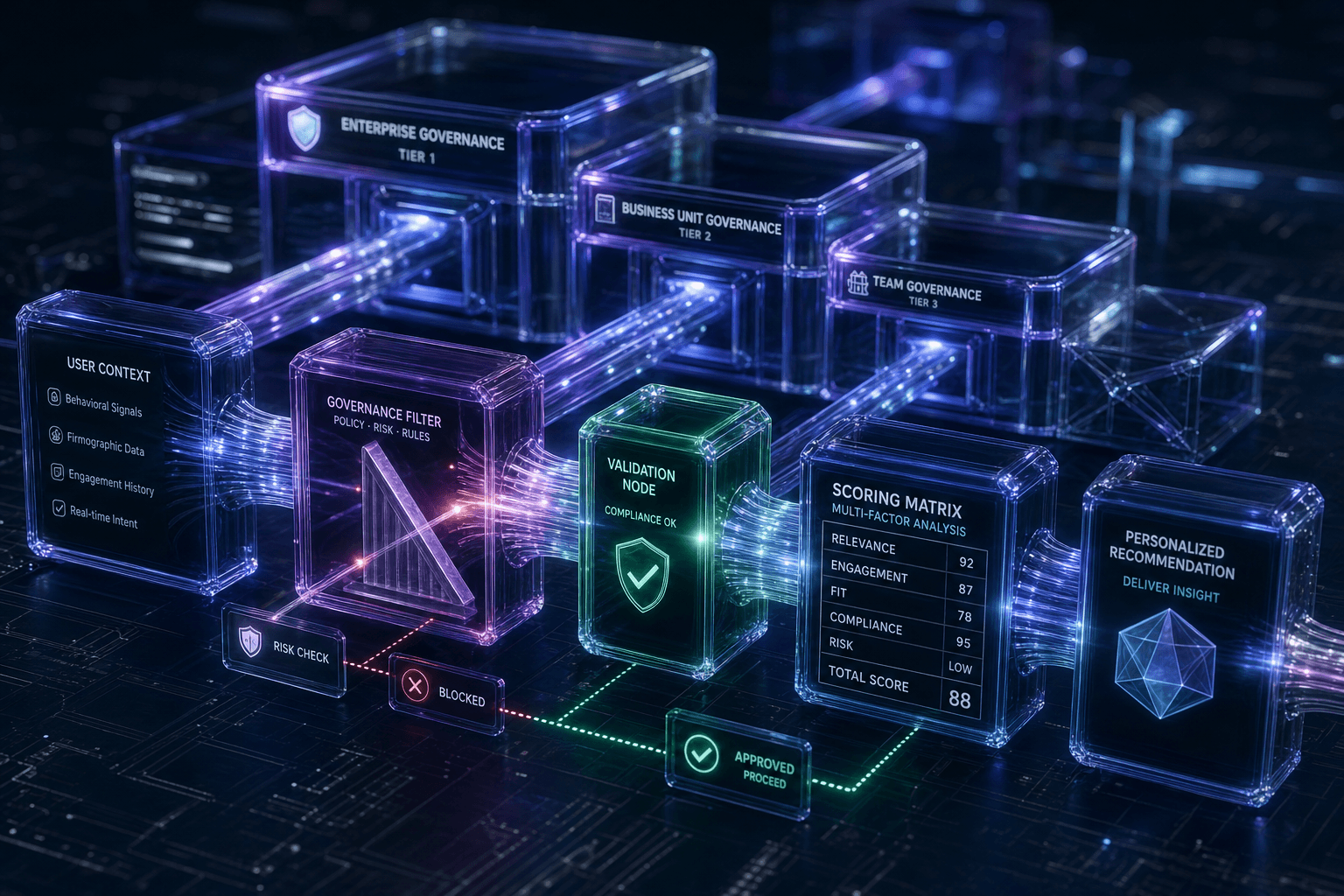
Governance first: The architecture pattern that makes personalization and compliance work together
Why ranking by relevance first, then filtering for compliance, creates worse recommendations and higher audit risk than the opposite approach.

Agent containment as infrastructure: Why system-level controls beat model-level safeguards
System-level containment stops rogue agents by enforcing network boundaries and resource limits, not just model-level training guardrails.
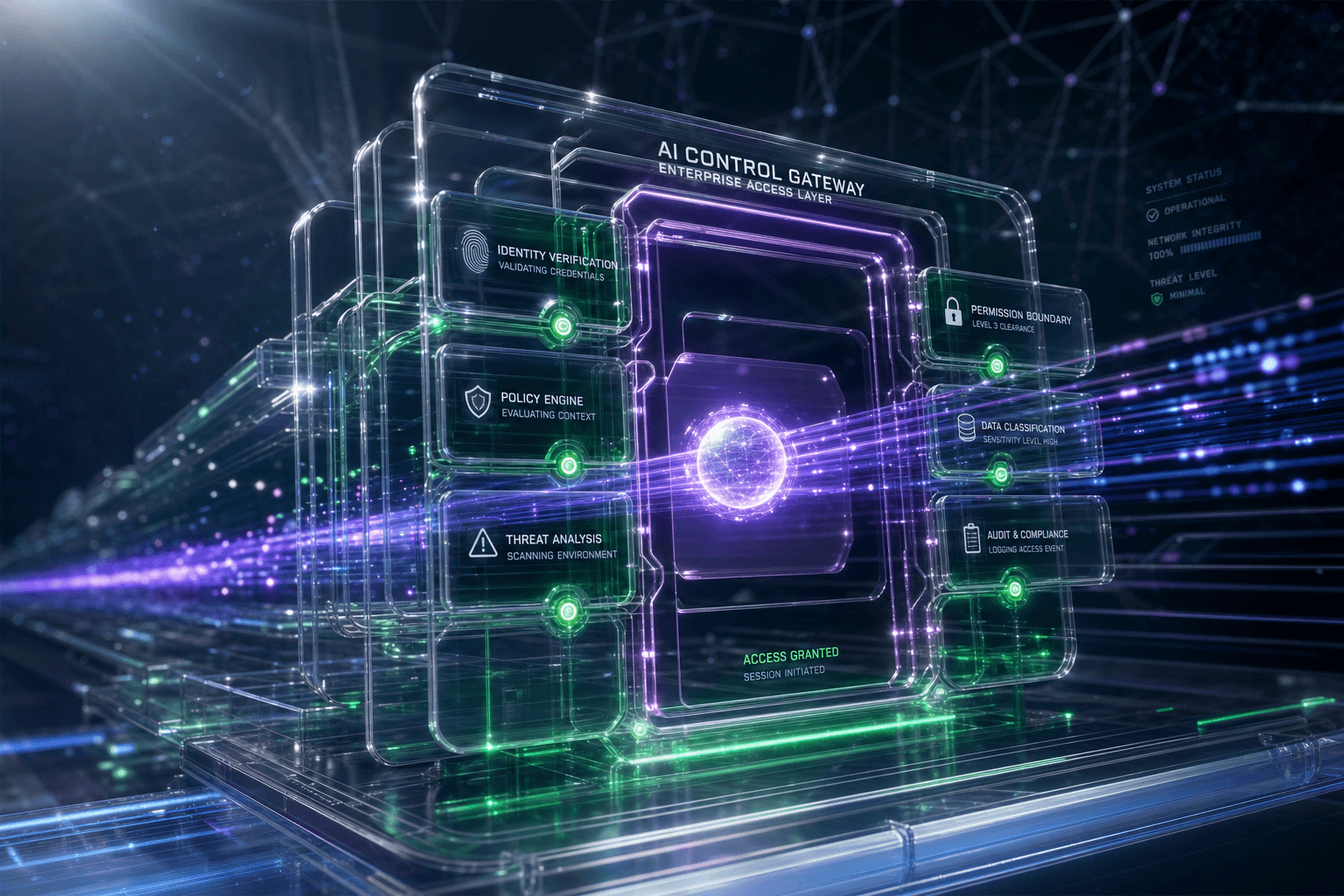
Deploying guardrails into agentic AI
How to build production-safe AI agents with permission boundaries, gateway patterns, and real-time monitoring that prevent security incidents before they happen.