Beyond the Data Moat: Architecting Decentralised Data Ownership for Enterprise AI Agility
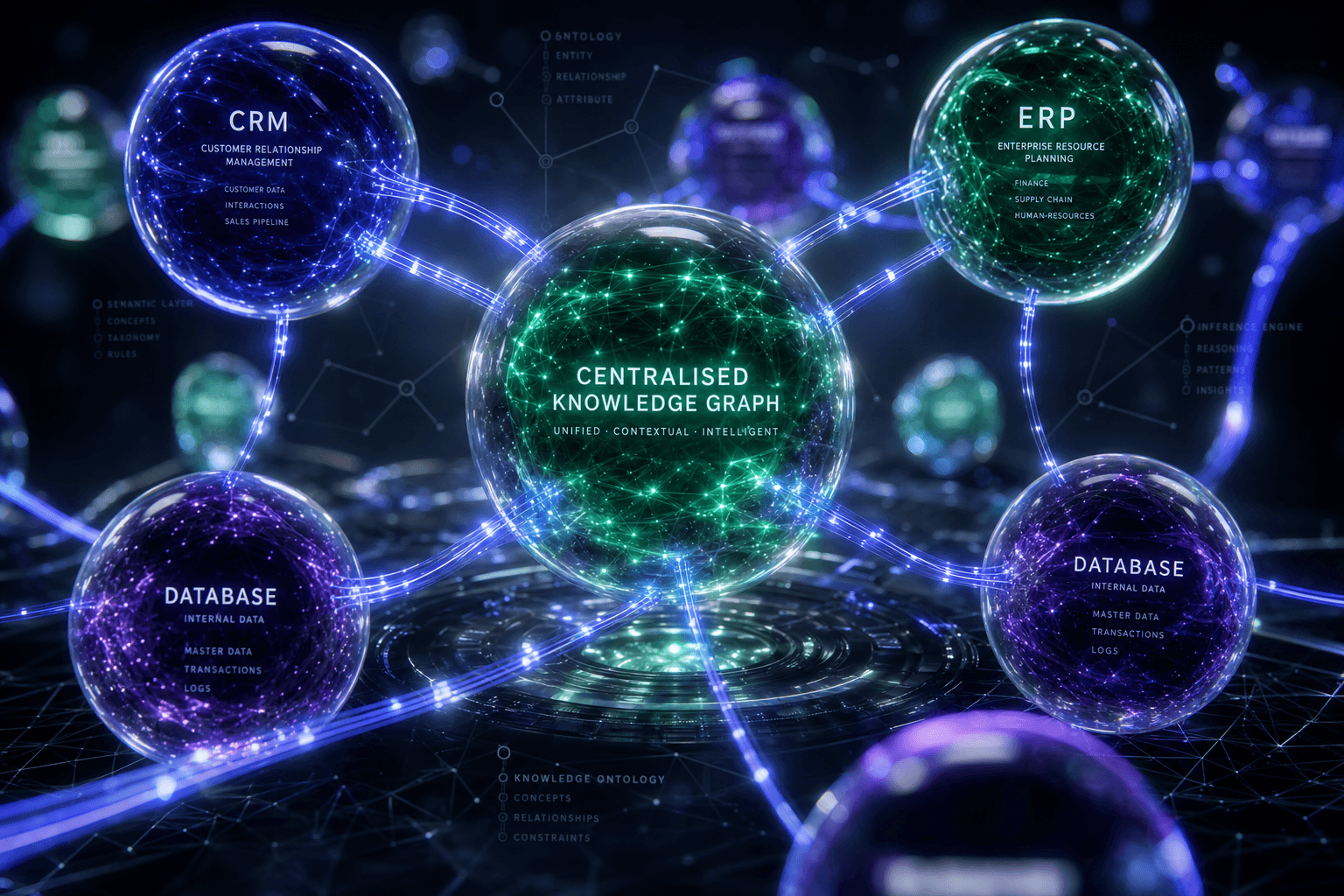
{ "id": "recsN832RwxTz0PZk", "createdAt": "2026-08-09T09:01:14.000Z", "title": "Beyond the Data Moat: Architecting Decentralised Data Ownership for Enterprise AI Agility", "category": "Enterprise Architecture", "excerpt": "A strategic briefing on how to navigate 'Beyond the Data Moat' as an independent artist.", "content": "# Stop Treating Your Data Like a Liability: Build Real AI Agility with Decentralised Ownership\n\\### Key Takeaways\n\\- This is my first test takeaway\n\\- This is my second test takeaway\n\n\n## The Wake-Up Call You Can't Ignore\n\nRemember the 2026 data sovereignty audit revelations? Several major companies paid hefty fines for accidentally leaking proprietary data through third-party AI service calls. \n\nHere's the problem: Your critical business data sits replicated across countless vendor-controlled silos. You're trying to govern it. You're trying to integrate it with LLMs securely. And you're walking a tightrope.\n\nGenerative AI models now define your competitive advantage. But your current setup makes secure adoption dangerous. You're not alone in feeling this tension.\n\n## Why Your Current Data Setup Fails the AI Test\n\nYou've got SaaS vendors everywhere. Each one has embedded AI capabilities. You want sophisticated internal LLM applications. The result? A fragmented data landscape that creates more problems than it solves.\n\nYour data warehouse works fine for analytics. But when you need to feed proprietary data into AI models—whether hosted externally or internally with complex permissions—you hit a wall. You can't provide the granular access control and verifiable provenance these systems demand.\n\nThe market has shifted. Data sovereignty isn't about geographic location anymore. It's about verifiable, auditable control over data movement and processing, especially for AI.\n\nTwo forces drive this shift:\n- Escalating regulations (GDPR, CCPA, and new AI-specific data laws)\n- The strategic need to use AI without compromising IP or customer trust\n\n## Your New Data Architecture: Domain Ownership, Not Monoliths\n\nHere's a different approach: Build a federated network of domain-owned data products. Each one has its own API, defined schema, and embedded security policies.\n\nThis is data mesh thinking with a critical upgrade. Domain teams own their data AND its exposure points AND its access governance mechanisms.\n\nWhat does this give you?\n\n**Fine-grained control.** You decide which specific data attributes get exposed to internal or self-hosted LLMs, and under what conditions.\n\n**Synthetic data contracts.** You present only anonymised or carefully sanitised data vectors to external AI services. This dramatically reduces the attack surface for proprietary information.\n\n**Auditable sharing.** You can share data across enterprise boundaries and with AI services securely. Innovation happens without compromising data integrity.\n\n## What Implementation Actually Looks Like\n\nBe realistic about what this requires. You're making significant organisational and cultural shifts. Central IT won't be the sole data custodian anymore.\n\nYou'll need to invest in:\n- Domain-specific data engineering capabilities\n- Robust API management layers\n- A unified policy enforcement framework\n\nThe technical challenges are real:\n- Maintaining data consistency across distributed domains\n- Managing data lineage\n- Building a cohesive data discovery and cataloguing system\n\nThe initial overhead is considerable. But the long-term gains in data security, compliance, and AI agility far outweigh the investment—especially if you handle highly sensitive data or operate in heavily regulated industries.\n\nStart smart: Pick critical, high-risk data domains first. Build from there.\n\n## Real-World Applications That Actually Work\n\n### Secure Product Development with AI\nYour financial services firm wants to use internal LLMs for code generation and vulnerability scanning. Instead of exposing full source code repositories, you share only anonymised code snippets and project metadata. Each development team controls the API exposing their code data. No central bottleneck. No unnecessary risk.\n\n### Hyper-Personalised Customer Service (Localised LLMs)\nYour healthcare provider trains a localised, self-hosted LLM on patient interaction transcripts for empathetic response generation. Patient data stays managed by the clinical department. Strict access policies get enforced at the data product API layer. Only approved, anonymised features reach the LLM. The data never leaves departmental control.\n\n### Supply Chain Optimisation with External AI Partners\nYour manufacturing company works with third-party logistics providers. You share specific, non-proprietary inventory movement data with external AI models for route optimisation. Your proprietary manufacturing processes and costs? They remain strictly under production domain control. The 3PL never sees them.\n\n### Compliance & Audit Trails\nIf you operate under stringent data privacy laws, this architecture provides an immutable, auditable log of data access and usage at the domain level. Compliance reporting gets simpler. Regulatory penalty risk drops dramatically.\n\n## Your Competitive Advantage Starts Here\n\nStop playing defense. Stop patching data leaks. Stop negotiating restrictive vendor contracts.\n\nBuild a proactive, resilient data foundation where security and compliance are part of the architecture from the start—within each data domain.\n\nThis shift empowers your domain teams. It accelerates responsible AI adoption. It positions your organisation as an autonomous, scalable entity that leverages its most valuable asset—its data—with genuine agility and unwavering trust.\n\nYou'll move faster than competitors stuck in reactive mode. You'll innovate without the constant fear of compliance violations. You'll actually use AI to win.\n\n## Start Marketing the Right Way\n\nReady to build a data architecture where your data fuels innovation without compromise? \n\n**Contact WrightyMedia for a technical consultation on designing and implementing a decentralised data ownership framework for your enterprise AI initiatives.**\n\n\n**Further Reading:**\n- The Data Mesh: Delivering Data-Driven Value at Scale — O'Reilly Media — <https://www.oreilly.com/library/view/data-mesh/9781492092454/>", "imageAssetId": "image-346cb09f32f9b5aa8bd5b877c218ee900b00a53c-1536x1024-png", "tldrOpening": "", "internalLinks": "", "externalLinks": "", "keyTakeaways": "" }