
Beyond point-and-click: Architecting sovereign integrations for
Build a robust RevOps architecture with sovereign integrations that control your data flow, reduce technical debt, and eliminate fragile SaaS connections.
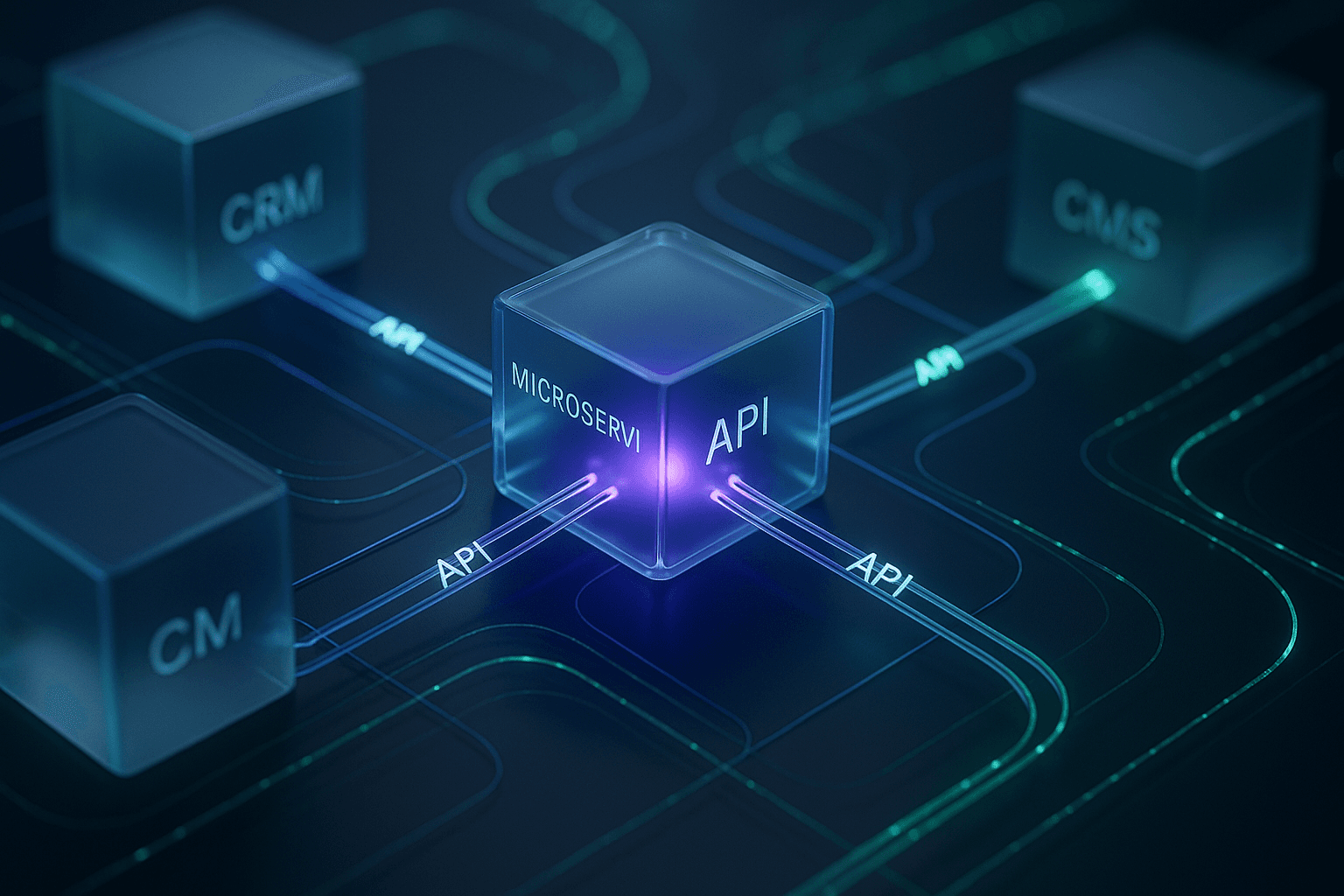
Your sales team just closed a major enterprise deal. The data sits in your CRM. Your finance team needs it in the ERP. Your marketing team wants to update the customer's subscription tier in your content management system. Your support team requires access to the complete account history.
You have three options. Manual data entry. A vendor's pre-built connector. Or constant intervention from your engineering team to patch broken sync processes.
None of these options actually work at scale.
The typical enterprise revenue operations stack in 2026 contains between 15 and 40 distinct software platforms. Each one promises seamless integration. Each one delivers a slightly different version of "seamless." The result is a patchwork of fragile connections that break when vendors update their APIs, when data structures evolve, or when your business processes outgrow the rigid workflows these connectors were designed to support.
This creates a specific, measurable problem. Your revenue operations team spends 20-30% of their time managing integration failures, reconciling data discrepancies, and manually updating records across systems. That's not operational efficiency. That's managed chaos.
Why point-and-click integrations create technical debt
Vendor-provided connectors arrive with an attractive promise. Connect your CRM to your marketing automation platform in minutes. No code required. Just authenticate, select your fields, and watch the data flow.
The problem emerges three to six months later.
Your sales process changes. You add a new qualification stage. You modify your deal structure. You introduce a new product line with different pricing logic. Suddenly, the pre-built connector can't accommodate your workflow. The vendor's roadmap doesn't include your specific use case. You're stuck waiting for a feature request to be prioritized, or you're forced to contort your business process to fit the connector's limitations.
This is architectural constraint disguised as convenience.
The second problem is data drift. When each integration operates independently, with its own sync schedule and error handling logic, you end up with multiple versions of truth. Your CRM shows one customer status. Your marketing platform shows another. Your financial system shows a third. Your reporting becomes unreliable. Your segmentation becomes inaccurate. Your personalization efforts fail because they're operating on stale or inconsistent data.
The third problem is vendor lock-in. When your core operational logic lives inside a vendor's integration platform, switching tools becomes exponentially more complex. You're not just migrating data. You're rebuilding every workflow, every automation, every data transformation rule. The switching cost keeps you trapped in systems that no longer serve your needs.
The case for sovereign integration architecture
Sovereign integration means your business owns the orchestration layer. You define how data moves between systems. You control the transformation logic. You decide when and how information syncs. You're not dependent on a vendor's update cycle or roadmap priorities.
This requires a different technical approach.
Instead of relying on pre-built connectors, you build a self-managed integration fabric. This fabric sits between your operational systems and orchestrates data flow according to your specific business rules. It ingests data from multiple sources, normalizes it into a consistent format, applies your transformation logic, and distributes it to the appropriate downstream systems.
The components are straightforward.
You need an API layer that can communicate with your existing systems. Next.js serves this role effectively, providing both a presentation layer for internal tools and a robust API structure for data ingestion and distribution. You need automation logic to define how data moves and transforms. Tools like n8n or custom microservices give you complete control over workflow orchestration without vendor constraints. You need data storage that maintains a canonical version of your operational data, serving as the single source of truth across your revenue stack.
This architecture delivers three specific advantages.
First, you eliminate data inconsistency. All systems reference the same canonical data model. When a customer record updates, that change propagates consistently across every platform. Your reporting becomes reliable. Your segmentation becomes accurate. Your teams stop wasting time reconciling conflicting information.
Second, you gain workflow agility. When your business process changes, you update your orchestration logic once. You're not negotiating with multiple vendors or waiting for connector updates. You adapt immediately. This matters when market conditions shift, when you enter new segments, or when competitive pressure demands rapid operational evolution.
Third, you reduce integration fragility. Your orchestration layer includes centralized error handling, retry logic, and monitoring. When an API changes or a system experiences downtime, you have complete visibility and control over the recovery process. You're not dependent on a vendor's support queue to restore critical data flows.
Architecture blueprint: CRM to headless CMS synchronization
Let's examine a specific implementation. You're running an enterprise with a modern CRM (Salesforce, HubSpot, or similar) and a headless CMS (Contentful, Sanity, Strapi) powering your customer portal. You need customer subscription data from the CRM to control content access and personalization in the CMS.
The vendor approach would be a direct API connection. Your CRM pushes updates to your CMS via webhook. This works until your data structure becomes more complex. You add multiple subscription tiers. You introduce provisional access for trial accounts. You need to sync historical purchase data to enable content recommendations.
The pre-built connector can't handle this complexity. You're forced to choose between manually updating CMS records or building custom code that bypasses the connector entirely.
The sovereign approach looks different.
Your Next.js application serves as the API gateway. It exposes endpoints that your CRM can call when subscription data changes. When an update arrives, your orchestration layer (n8n or a custom service) receives the data, validates it against your business rules, enriches it with additional context from your data warehouse, transforms it into the CMS's required format, and pushes it to the appropriate CMS endpoint.
You also maintain a PostgreSQL or similar database that stores the canonical subscription state. This becomes your single source of truth. If the CMS sync fails, your data persists. If you need to rebuild CMS records, you have a complete audit trail. If you want to generate reports on subscription changes, you query your own database instead of extracting data from multiple vendor APIs.
The workflow logic sits in your control. You define how trial subscriptions should appear in the CMS. You specify which historical purchase data should sync. You determine how quickly changes propagate. You're not constrained by a vendor's pre-defined workflow assumptions.
Unified customer profile without vendor dependency
Enterprise organizations typically maintain customer data across five or more systems. Your CRM holds sales and opportunity data. Your marketing automation platform stores campaign engagement. Your support system tracks tickets and resolutions. Your product analytics platform captures usage patterns. Your billing system maintains payment history.
Each system offers its own version of the customer profile. None of them complete.
The traditional approach is a customer data platform that promises to unify these records. You're trading one set of integration problems for another. You're still dependent on the CDP's connectors. You're still constrained by their data model. You're still paying increasing licensing fees as your customer base grows.
The sovereign approach builds your own unified profile layer.
Your integration fabric pulls customer data from each source system on a defined schedule or via real-time webhooks. It applies entity resolution logic to match records across systems (email address, customer ID, phone number, or custom matching rules you define). It merges these records into a unified customer object stored in your database. It exposes this unified profile through your Next.js API layer.
Now your sales team, marketing team, and support team all reference the same customer data. Your personalization engine draws from a complete profile instead of fragmented records. Your reporting shows accurate customer journey analytics because you're analyzing integrated data instead of disconnected events.
You control the data model. When you need to add a new customer attribute, you modify your database schema and update your transformation logic. You don't wait for a vendor to support your use case. You don't pay additional fees for custom fields. You don't rebuild integrations because a vendor deprecated an API endpoint.
Quote-to-cash automation without manual handoffs
Revenue leakage often occurs in the transition between systems. A deal closes in the CRM. Someone manually creates an invoice in the ERP. The finance team updates the accounting system. The provisioning team receives an email to activate the customer's account. Each handoff introduces delay and error risk.
The standard approach is to purchase an integrated quote-to-cash platform. You're replacing multiple systems with a single vendor. You're simplifying your stack but accepting that vendor's limitations. When your pricing structure becomes more complex, when you need custom approval workflows, or when you want to integrate with specialized tools, you're back to managing exceptions and workarounds.
The sovereign approach automates the entire flow through orchestration.
When a deal reaches "closed won" status in your CRM, your integration fabric captures that event. It extracts the deal details (products, quantities, pricing, customer information). It applies your business rules (discount approvals, payment terms, provisioning requirements). It creates the invoice in your ERP with the correct coding. It updates your accounting system with the revenue recognition schedule. It triggers your provisioning system to activate the customer's account. It sends confirmation to your support team with the complete customer context.
Each step includes error handling. If the ERP is temporarily unavailable, your orchestration layer retries. If the data fails validation, it alerts your operations team with specific error details. If manual approval is required, it routes to the appropriate person and waits for confirmation before proceeding.
You define these rules. You modify them as your business evolves. You're not constrained by a vendor's implementation of "quote-to-cash." You've built a process that matches your operational reality.
Dynamic content personalization with real-time data
Modern headless CMS platforms enable content personalization, but they're limited by the data available within the CMS. You can personalize based on content preferences or basic demographic information. You can't easily personalize based on recent purchase behavior, current subscription tier, outstanding support tickets, or product usage patterns unless you manually sync that data into the CMS.
The typical approach is to use the CMS vendor's personalization engine with its built-in integrations. You're limited to the data sources they support. You're constrained by their personalization logic. You're paying premium pricing for features that don't quite match your needs.
The sovereign approach treats your Next.js application as the personalization layer.
When a user requests content, your Next.js application queries your unified customer profile (which your integration fabric maintains). It retrieves the customer's current subscription status, recent purchases, support history, and product usage metrics. It passes relevant context to your headless CMS API to fetch appropriate content. It applies additional business logic to determine which content variants to display, which calls-to-action to show, and which offers to present.
This happens in real-time. Your personalization reflects the customer's current state, not a stale snapshot from the last sync. You can personalize based on any data your organization maintains, not just what your CMS vendor supports. You can modify personalization rules immediately when business requirements change.
You've separated content storage (headless CMS) from content delivery and personalization (Next.js plus your data layer). This gives you maximum flexibility without vendor constraint.
Implementation reality: what this actually requires
Building sovereign integration architecture is not a weekend project. It's a strategic technical investment.
You need engineering capability. Your team must understand API design, data modeling, authentication protocols, and error handling patterns. If you're currently relying entirely on no-code tools and vendor support, you'll need to develop or hire this expertise.
You need infrastructure. Self-hosting automation engines, maintaining databases, and running Next.js applications require server capacity and DevOps knowledge. Services like Vercel simplify deployment for Next.js, but you're still responsible for monitoring, scaling, and security.
You need ongoing maintenance. APIs evolve. Business processes change. New systems enter your stack. Your integration layer requires active management, not passive operation.
The investment pays back through reduced operational friction, increased data accuracy, and workflow agility. When your revenue operations team stops spending hours reconciling data and troubleshooting broken syncs, they can focus on strategy and optimization. When your business can adapt processes in days instead of months, you gain competitive advantage. When your reporting becomes reliable, your decisions improve.
This is not about replacing every integration. Some vendor-provided connectors work well for simple, stable use cases. This is about taking control of your critical data flows, the ones that directly impact revenue, the ones that require business-specific logic, the ones where data accuracy and workflow flexibility matter most.
Moving from vendor dependency to architectural ownership
The shift from managed integrations to sovereign architecture is a shift in operational philosophy.
Most organizations optimize for initial implementation speed. They choose tools that promise rapid deployment and minimal technical overhead. This works until the business outgrows the tools. Then they're stuck in a cycle of workarounds, manual processes, and delayed innovation.
Architectural ownership prioritizes long-term adaptability. The initial setup takes longer. It requires more technical investment. But you're building operational infrastructure that scales with your business, not against it.
You're no longer asking vendors for features. You're implementing solutions that match your exact requirements. You're no longer waiting for API updates. You're controlling your own integration logic. You're no longer managing data inconsistencies. You've built a canonical data model that serves your entire organization.
This is the foundation for genuine revenue operations excellence. Not perfect tools. Not magic platforms. Owned architecture that serves your specific business reality.
Start marketing the right way. Build the operational infrastructure that lets your strategy scale.
Up Next
Continue your journey into Strategy.
Reclaiming digital velocity: Architecting headless CRM for
Learn how headless CRM architecture with Next.js empowers marketing teams to deploy content faster, improve SEO, and drive growth without engineering delays.

Beyond the headless mirage: Architecting truly sovereign CRM
Learn how to build a sovereign CRM with Next.js and self-hosted LLMs. Keep customer data secure, compliant, and under your control. No third-party risks.
Blog brief: Model context protocol as the invisible plumbing
Learn how Model Context Protocol became the infrastructure standard that makes enterprise AI agents production-ready. MCP reduces integration time by 70%.