
From augmentation to autonomous replacement in enterprise AI
Enterprise executives are buying autonomous agents that replace workflows, not augmentation tools that require employee adoption.

Key Takeaways
- Enterprise boards are funding autonomous agents that replace entire workflows, not copilots that augment individual tasks.
- Autonomous AI delivers measurable ROI through headcount reduction and cost per transaction, while augmentation tools struggle with adoption friction.
- The three-tier governance framework (Foundation, Workflow, Autonomous) is the infrastructure layer that makes enterprise agent deployment trustworthy and scalable.
- Companies deploying rule-based workflow automation in customer service, claims processing, and document intake are seeing 70-90% cost reductions within weeks.
Enterprise AI spending is shifting away from productivity tools like Copilot and towards autonomous agents that replace entire job functions. Executives want systems that eliminate costs through automation, not tools that require employees to change how they work. The revenue is following top-down replacement, not bottom-up augmentation.
Ben Thompson's September 2024 Stratechery analysis landed like a bomb: Salesforce's Agentforce (top-down replacement) versus Microsoft's Copilot (bottom-up augmentation) aren't just competing products. They're competing philosophies for how AI will actually transform enterprise operations.
The data backs Thompson's thesis. Gartner forecasts agentic workflows will represent 50% of GenAI model revenue by 2030—up from just 5% in 2025. That's not incremental growth. That's a complete market reorientation.
The augmentation narrative is collapsing
For three years, the enterprise AI story centered on augmentation. Tools like Copilot would amplify human capability. Employees would choose to use them. Productivity would compound across the organization.
Boards are now asking a different question: "Can AI replace the role entirely?" Not "Can it make the role better?"
This shift changes everything:
Decision authority moves from individual employees (who must choose to use Copilot) to executives (who mandate autonomous systems).
ROI measurement moves from soft metrics (time saved) to hard metrics (cost per transaction, revenue per workflow).
Architecture complexity moves from simple LLM APIs to governance frameworks that enable constrained autonomy.
The market is responding. Salesforce launched Agentforce for fully autonomous sales, service, and commerce workflows. Adobe introduced CX Enterprise with AI agents for marketing automation. Standard Template Labs raised $49M to build enterprise automation workflows.
Gartner predicts 50% of enterprise AI agents will depend on standardized connectivity protocols by 2027. The infrastructure layer is already forming.
Why history favors replacement over augmentation
This isn't the first time enterprises faced this choice. The pattern repeats across four computing waves.
Wave 1: Back-office digitization (1908–1970s)
Computers didn't augment bank tellers to work faster. They replaced tellers entirely. Executives and finance leaders made the decision from the top. No employee had a choice. Result: massive cost reduction, eliminated job functions.
Wave 2: Personal computers (1970s–1990s)
VisiCalc spreadsheet enabled motivated employees to model scenarios. Adoption required individual choice and initiative. Executives didn't mandate PCs; employees demanded them. Result: bottom-up transformation driven by user demand.
Wave 3: SaaS and cloud (2000s–2020s)
Adoption model: consumerization. Employees used consumer tools, enterprises adopted them. Decision authority was mixed—employees recommended, IT deployed.
Wave 4: Autonomous agents (today)
Enterprise executives want autonomous systems. Top-down, like Wave 1. Decision authority sits at the CxO level. Organizations must redesign workflows to accommodate autonomy.
Copilot fails here because it requires employee volition. It's Clippy 2.0.
The adoption friction problem
Microsoft Copilot faces a roadblock: changing employee workflows is hard. Even if Copilot saves 30 minutes per day, adoption requires:
- Employees learning the tool
- Employees trusting the AI output
- Employees changing their processes to incorporate the tool
- Managers ensuring their teams use it consistently
No employee has ever been fired for not using Copilot. But thousands have been fired—or had jobs eliminated—by autonomous agents handling customer service.
Autonomous agents have no adoption friction:
- No employee volition required (executives mandate the agent)
- No change management friction (the agent simply handles the task)
- Clear ROI (cost per transaction drops 70–90%)
- Governance frameworks enable trust
Where autonomous agents actually work
Not every workflow is ready for replacement.
High-fit industries: Customer service, claims processing, document intake, payroll, accounts payable, routine coding tasks. These are deterministic, high-volume, low-context workflows.
Company size: Mid-market and enterprise, where payroll savings exceed AI infrastructure costs.
Current stage: Organizations that have already deployed pilot AI projects and want to move beyond demos to revenue impact.
Not applicable: Creative work requiring human judgment, strategic decision-making, novel problem-solving, relationship-driven sales. Anywhere context and human trust dominate.
The governance reality
Autonomous agents only work when enterprises implement three-tier governance architecture: Foundation → Workflow → Autonomous.
Many companies deploying agents without governance hit regulatory, compliance, or quality issues within six months.
Foundation tier controls tool orchestration, behavioral monitoring, and data governance. Workflow tier defines explicit orchestration patterns—prompt chaining, routing logic, guardrails. Autonomous tier removes human checkpoints after quality thresholds are met.
Your 8-week deployment blueprint
Phase 1: Identify replacement candidates (week 1–2)
Audit your customer-facing or back-office workflows for automation readiness:
Data availability: Is structured data available as input?
Determinism: Is the workflow 80%+ rule-based or pattern-matching?
Volume: High-frequency workflow where even small cost reductions matter?
Examples: customer intake forms, invoice processing, first-line support triage.
Build a simple scoring matrix:
- Automation readiness score (high/medium/low)
- ROI potential (cost savings if fully automated)
- Governance complexity (regulatory, compliance, risk assessment)
Prioritize: start with high-readiness, high-ROI, low-governance-complexity tasks.
Phase 2: Build foundation tier governance (week 3–4)
Implement tool orchestration layer:
- API gateway that controls which systems the AI agent can access
- Role-based permissions (agent can read from CRM, not write to accounting)
- Behavioral monitoring and cost tracking (alert on unusual spend)
Add reasoning transparency:
- Log every decision the agent makes
- Track confidence scores (is the agent 95% sure or 60% sure?)
- Implement automatic escalation rules (if confidence < 70%, send to human)
Data governance:
- Tag sensitive data (PII, HIPAA-regulated, confidential)
- Implement differential privacy (mask customer names when agent learns from patterns)
Phase 3: Deploy first workflow tier agent (week 5–6)
Choose the simplest automation opportunity (customer support email triage).
Define explicit orchestration pattern:
- Prompt chaining: "Extract complaint type" → "Route to correct team"
- Add guardrails: agent can triage but not resolve
- Include human-in-the-loop checkpoints every N interactions
Instrument for observability:
- Track accuracy (what % of triages are correct?)
- Track escalation rate (what % require human review?)
- Track cost per transaction
Phase 4: Measure and expand (week 7–8)
Run for two weeks, measure:
- Cost reduction (baseline: manual triage cost vs. agent cost)
- Quality metrics (false positive rate, escalation rate)
- User satisfaction (do humans appreciate the agent?)
If metrics are positive (>50% cost reduction, <10% error rate):
- Gradually increase agent autonomy (remove human checkpoints if quality holds)
- Expand to additional workflows
If metrics miss targets:
- Debug: is the agent hallucinating? Is data quality poor? Is the workflow too complex?
- Iterate on governance (add more checkpoints, improve reasoning transparency)
Real implementation: Enterprise support triage
Workflow: Customer emails support@ → AI agent reads email → agent decides: is this a bug, billing issue, feature request? → routes to correct team queue.
Foundation tier setup:
- API access: CRM read-only, Jira read-only (create tickets), Slack write-only
- Behavioral monitoring: alert if agent creates >500 tickets/hour or emails same customer >3x
- Reasoning transparency: store decision rationale (Why did agent classify as "bug" not "feature request"?)
Workflow tier:
- Pattern 1: Prompt chaining (extract sentiment → determine urgency → route to tier 1 or escalate)
- Pattern 2: Routing (if "bug" → Jira; if "billing" → Finance queue; if "feature request" → Product)
- Orchestration guardrail: human review first 100 classifications before agent operates autonomously
Autonomous tier (after two weeks):
- If accuracy > 95% and no escalations: increase batch size, remove human review step
- Continue monitoring for drift (new email types, new issues agent hasn't seen)
Tech stack:
- Orchestration: n8n or Make.com (no-code, visual workflows)
- LLM API: OpenAI GPT-4o or Claude 3.5 (for reasoning transparency)
- Governance: LangSmith (observability) + custom monitoring scripts
- Storage: PostgreSQL for decision logs (required for audit trails)
The next 18 months will separate winners from losers
The philosophical pivot from augmentation to replacement isn't cynical. It's realistic about how organizations actually change.
Employees adopting new tools requires sustained motivation, change management, and cultural shift. Executives deploying autonomous systems requires just one decision: "This process is expensive and rule-based. Let's automate it."
Companies that deployed chatbots and Copilots without clear ROI will pressure IT teams to justify the spend. Companies that deployed autonomous agents will show headcount reductions and operational margin expansion.
Board conversations will shift from "How do we increase AI adoption?" to "Which manual processes can we eliminate?"
For CTOs and CROs, the implication is clear: build your AI stack for autonomy, not augmentation. Design for governance-enabled replacement, not productivity enhancement.
The adoption friction isn't technical. It's organizational. Get executive sponsorship first, technology second.
Ready to move from pilot to production? Download our 4-week roadmap with governance templates, decision matrices, and observability dashboards to deploy your first autonomous agent.
Want more on
Enterprise Architecture?
Add this topic to your Custom Digest. Drop your email to get our deepest insights on this exact topic.
Ready to fast-track your business?
We combine enterprise-level technical strategy with your existing business to solve complex blockers and accelerate your growth. Let's build something remarkable.
Partner With UsUp Next
Continue your journey into Enterprise Architecture.

How 280x inference cost deflation reshapes AI product economics
Inference costs fell 280x in 18 months—here's how to rebuild your AI pricing model before competitors do.
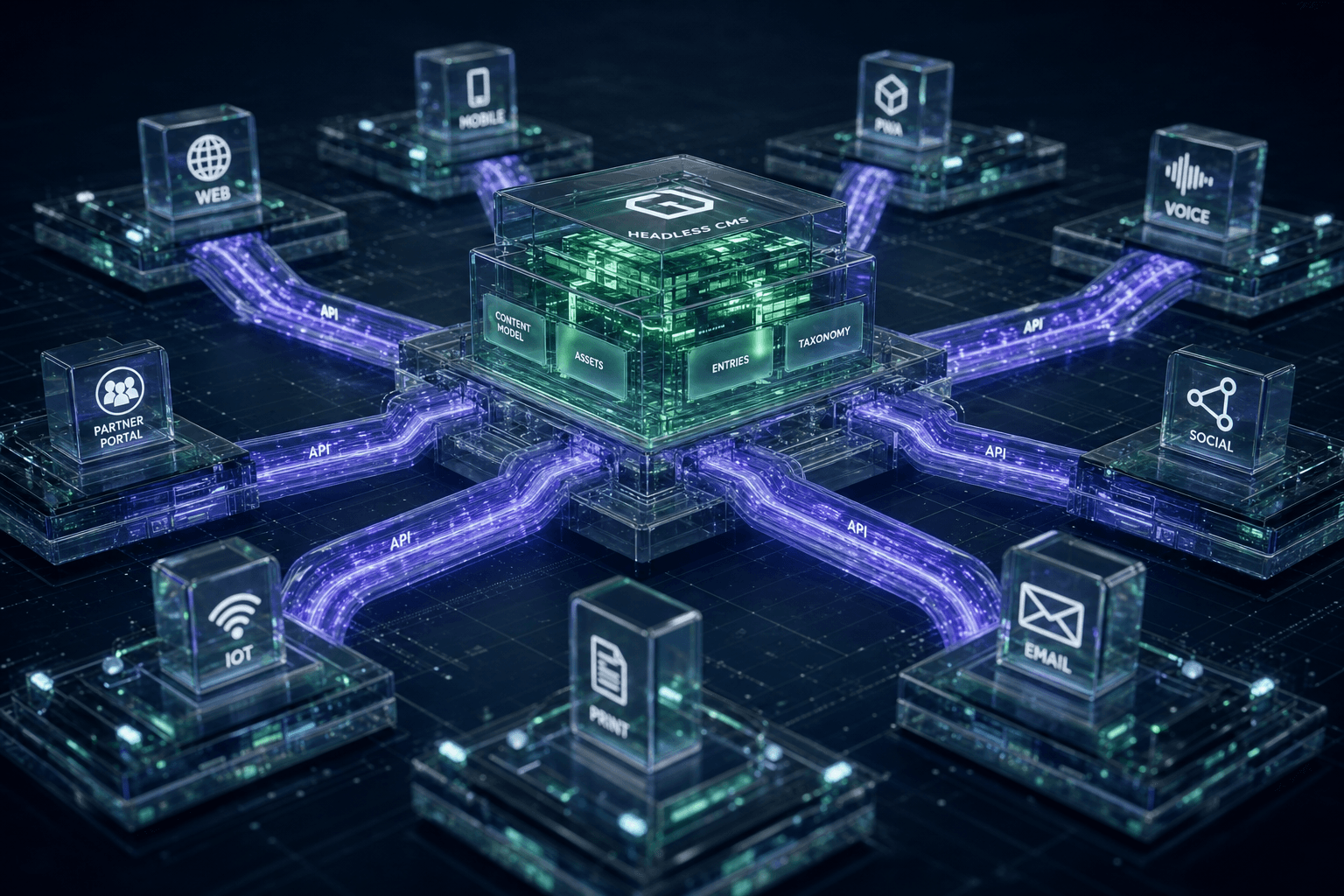
Channel-agnostic content delivery for enterprise growth teams
How channel-agnostic content architecture lets marketing teams publish faster without waiting for developers.

Why keeping full agent histories beat every compression strategy
Full context retention with prefix caching cuts agent token costs by 90% and outperforms every summarization strategy on recall.