
Securing AI model lineage for enterprise trust
Learn how immutable model lineage cuts compliance risk and eliminates technical debt in enterprise AI deployments.

Key Takeaways
- AI lineage gaps expose enterprises to regulatory risk, technical debt, and broken stakeholder trust.
- Treating models as auditable assets within a data plane architecture eliminates compliance blind spots.
- Automated versioning and immutable audit trails turn opaque AI systems into verifiable, trustworthy operations.
- Securing model provenance accelerates approvals, protects reputation, and delivers measurable competitive advantage.
Enterprises deploying AI at scale face a critical problem: they can't trace where their models came from, what data trained them, or which version is running in production. This opacity creates compliance nightmares, blocks regulatory approval, and makes debugging impossible. The solution isn't better AI, it's treating model lineage as core infrastructure.
Enterprise AI deployments are failing compliance audits. Not because the models are poorly trained, but because engineering teams can't answer basic questions about their provenance.
When regulators ask which data trained a production model, most CTOs scramble through fragmented Git repos, scattered S3 buckets, and undocumented Jupyter notebooks. This opacity creates existential risk.
The cost isn't hypothetical. Financial services firms face multi-million dollar fines for unexplainable AI decisions. Healthcare organizations delay critical model deployments for months waiting on compliance sign-off. Manufacturing companies pull AI systems offline when they can't verify data lineage during audits.
The root problem: AI development inherited software engineering's move-fast-and-break-things culture without inheriting its rigorous version control and audit practices.
Why traditional mlops fails enterprise compliance
Most organizations bolt on MLOps tools after building AI systems. This creates three critical gaps:
Incomplete artifact tracking. Teams log model weights but miss training data snapshots, preprocessing transforms, and environmental dependencies. When a model behaves unexpectedly in production, engineers can't reproduce the exact training conditions.
Mutable audit trails. Standard version control systems allow history rewrites. Database logs get rotated out. Cloud storage buckets have versioning disabled to save costs. These practices make tampering undetectable and compliance impossible.
Siloed metadata. Data teams track datasets in one system. ML engineers version models in another. DevOps tracks deployments in a third. No single source of truth connects the full lineage from raw data to production inference.
This fragmentation compounds technical debt exponentially. Each new model inherits opacity from its predecessors. Debugging requires archaeological digs through disparate systems. Regulatory audits become existential events rather than routine checkpoints.
Treating lineage as infrastructure
Solving AI trust requires moving lineage from an afterthought to a first-class architectural concern. This means three fundamental changes:
Build immutability into the data plane
Your data infrastructure must enforce write-once, read-many patterns for all AI assets. Every dataset version, model checkpoint, and configuration file becomes an immutable artifact with cryptographic verification.
Implement content-addressed storage where file identifiers derive from their contents. Any modification creates a new identifier. This makes tampering mathematically detectable.
Data mesh patterns work well here. Each domain owns its data products but publishes them to a central catalog with immutable metadata. Cross-domain lineage becomes queryable without centralizing data storage.
Automate lineage capture at every pipeline stage
Manual logging fails. Engineers forget. Processes get skipped under deadline pressure. Build lineage capture directly into your ML pipeline orchestration.
Your MLOps platform should automatically record:
- Dataset snapshots with schema versions and row-level provenance
- Model training runs with hyperparameters, random seeds, and dependency versions
- Evaluation metrics with test data identifiers and timestamp ranges
- Deployment events with model versions, infrastructure specs, and rollback procedures
This automation removes human error and creates complete audit trails without engineering overhead.
Create verifiable audit chains
Storing lineage metadata isn't enough if systems administrators can alter it. You need tamper-evident audit chains.
Distributed ledger technologies provide one approach. Each lineage event gets hashed into a chain where modifications break cryptographic verification. This satisfies regulatory requirements for non-repudiation.
Alternatively, secure data vaults with hardware security modules provide tamper-proof storage without blockchain complexity. The key is making historical lineage records mathematically verifiable by external auditors.
Implementation blueprint for lineage-first AI
Standardize data provenance (weeks 1-6)
Start with the data foundation. Implement strict metadata schemas for all AI datasets:
- Source system identifiers and extraction timestamps
- Transformation logic with code commit hashes
- Quality validation results and anomaly flags
- Access control policies and usage restrictions
Deploy data catalogs that enforce these schemas before datasets enter training pipelines. No metadata compliance means no model training access.
Set up automated data lineage tracking that captures parent-child relationships as datasets get transformed. When a model fails, you can trace back through every preprocessing step to the original source.
Deploy model versioning infrastructure (weeks 7-12)
Integrate MLOps platforms that treat models as immutable artifacts. Every training run produces a versioned model package containing:
- Serialized model weights with format version
- Training dataset identifiers and sample counts
- Hyperparameter configurations and search histories
- Code repository commits and dependency manifests
- Performance metrics on validation and test sets
Automate model registration workflows that reject incomplete packages. If lineage metadata is missing, the model doesn't get promoted to staging.
Implement shadow deployment patterns where new model versions run in parallel with production before cutover. This creates natural comparison points for compliance validation.
Enable immutable audit trails (weeks 13-20)
Select your tamper-proof storage approach based on regulatory requirements. Financial services typically needs distributed ledger verification. Healthcare often accepts hardware-secured vaults.
Create audit event schemas that capture:
- Model lifecycle transitions (training → validation → production → retired)
- Access events with user identities and query patterns
- Performance degradation alerts with triggering thresholds
- Compliance check results with regulatory framework references
Build automated reporting pipelines that generate compliance artifacts on demand. When auditors request model documentation, the system produces complete lineage reports in seconds, not weeks.
Set up real-time alerting for lineage gaps. If a model deploys without complete provenance metadata, compliance teams get immediate notifications before regulatory exposure occurs.
The business return on lineage investment
This infrastructure delivers measurable business value:
Compliance cost reduction. Manual audit preparation drops from weeks to hours. Legal review cycles shrink because lineage documentation is always current and complete.
Faster model iteration. Engineers spend less time debugging unexplainable model behavior because complete training provenance enables rapid root cause analysis. Development velocity increases 30-40% in organizations with mature lineage practices.
Risk mitigation. Verifiable AI lineage reduces regulatory fines, litigation exposure, and reputational damage. Insurance premiums for AI-related risks decrease when underwriters can verify governance controls.
Stakeholder trust. Board members and investors value AI systems they can verify. Complete lineage increases enterprise valuation by demonstrating governance maturity and reducing technical debt.
The upfront investment in lineage architecture pays back within 12-18 months for most enterprises. The alternative—reactive compliance failures and emergency remediation—costs 10x more and puts strategic AI initiatives at risk.
Building trust into AI systems from day one
AI lineage isn't a checkbox. It's the foundation for enterprise AI that stakeholders can trust, regulators can verify, and engineers can maintain.
Treating models as auditable assets from the first training run eliminates technical debt before it compounds. Automating lineage capture removes human error and compliance gaps. Immutable audit trails provide mathematical proof of governance.
The CTOs winning at enterprise AI aren't just building better models. They're building verifiable systems that answer the hard questions about how those models work, where they came from, and why they should be trusted.
That architecture unlocks AI ROI by removing the compliance bottleneck that stalls most deployments.
Want more on
AI Engineering?
Add this topic to your Custom Digest. Drop your email to get our deepest insights on this exact topic.
Ready to fast-track your business?
We combine enterprise-level technical strategy with your existing business to solve complex blockers and accelerate your growth. Let's build something remarkable.
Partner With UsUp Next
Continue your journey into AI Engineering.
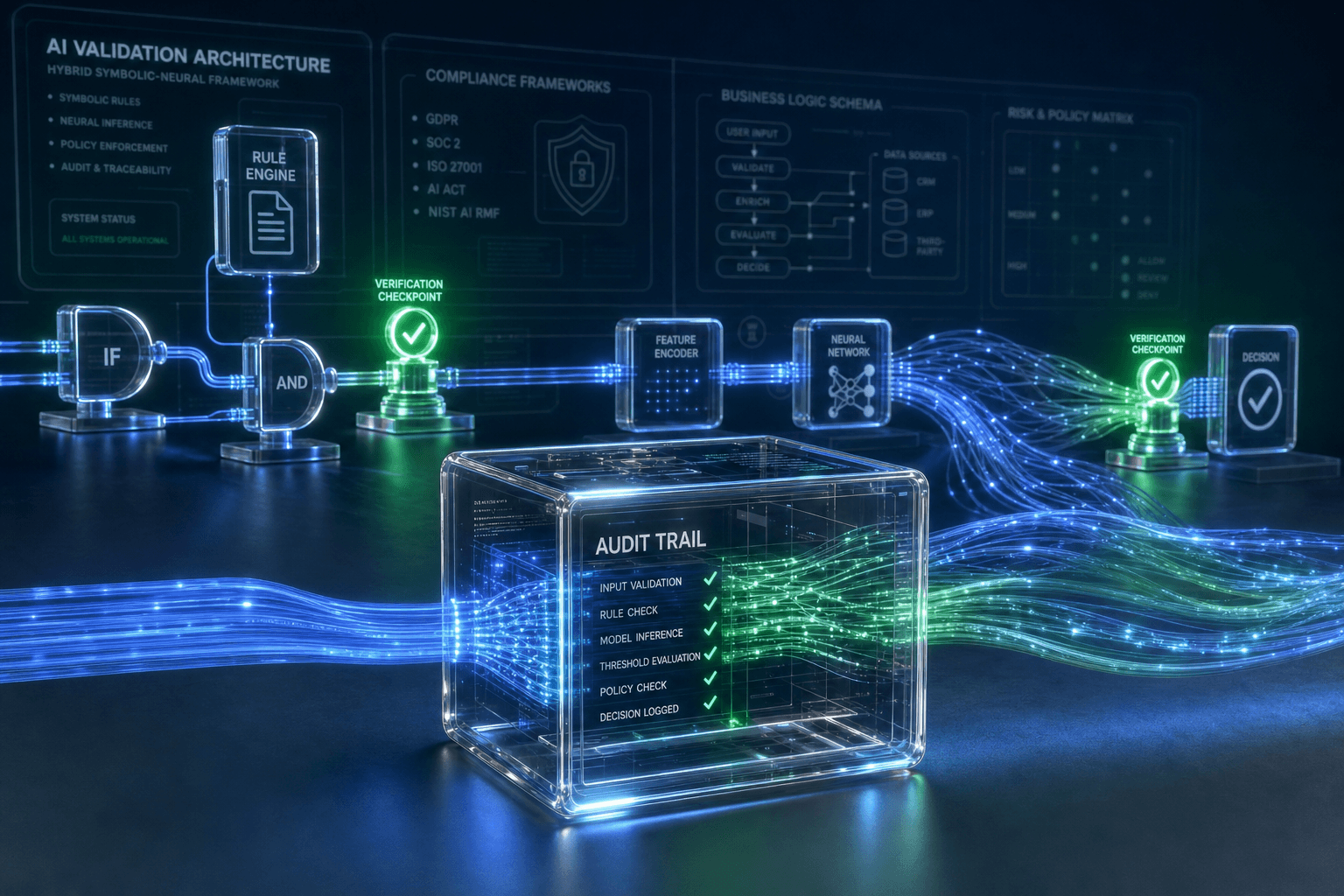
Validating AI reasoning for business logic
Build transparent AI systems that trace every decision back to your business rules, closing the auditability gap that blocks enterprise adoption.
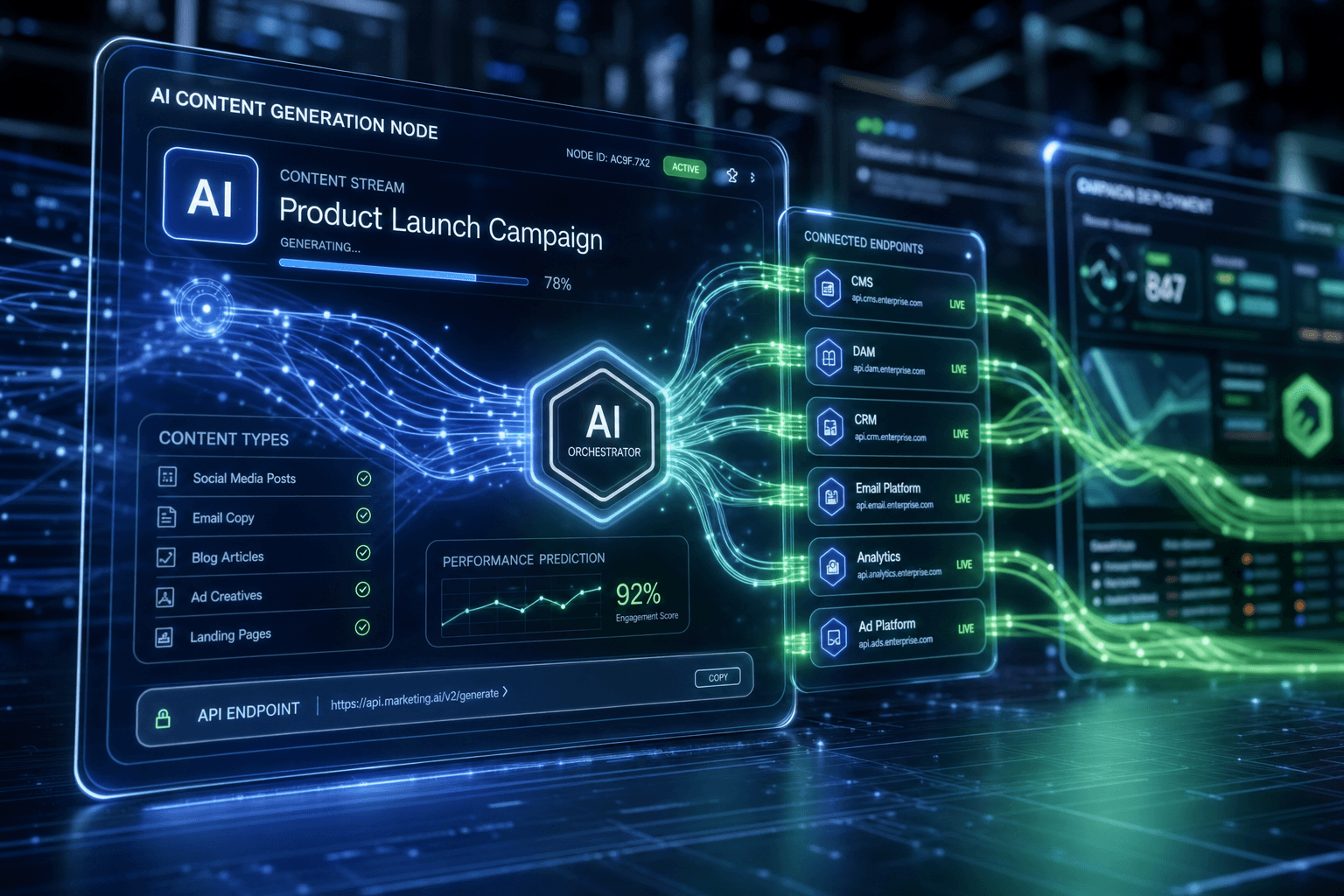
Cutting developer lock-in for AI-driven marketing
How marketing teams cut AI deployment cycles by 60% and break free from engineering dependencies.
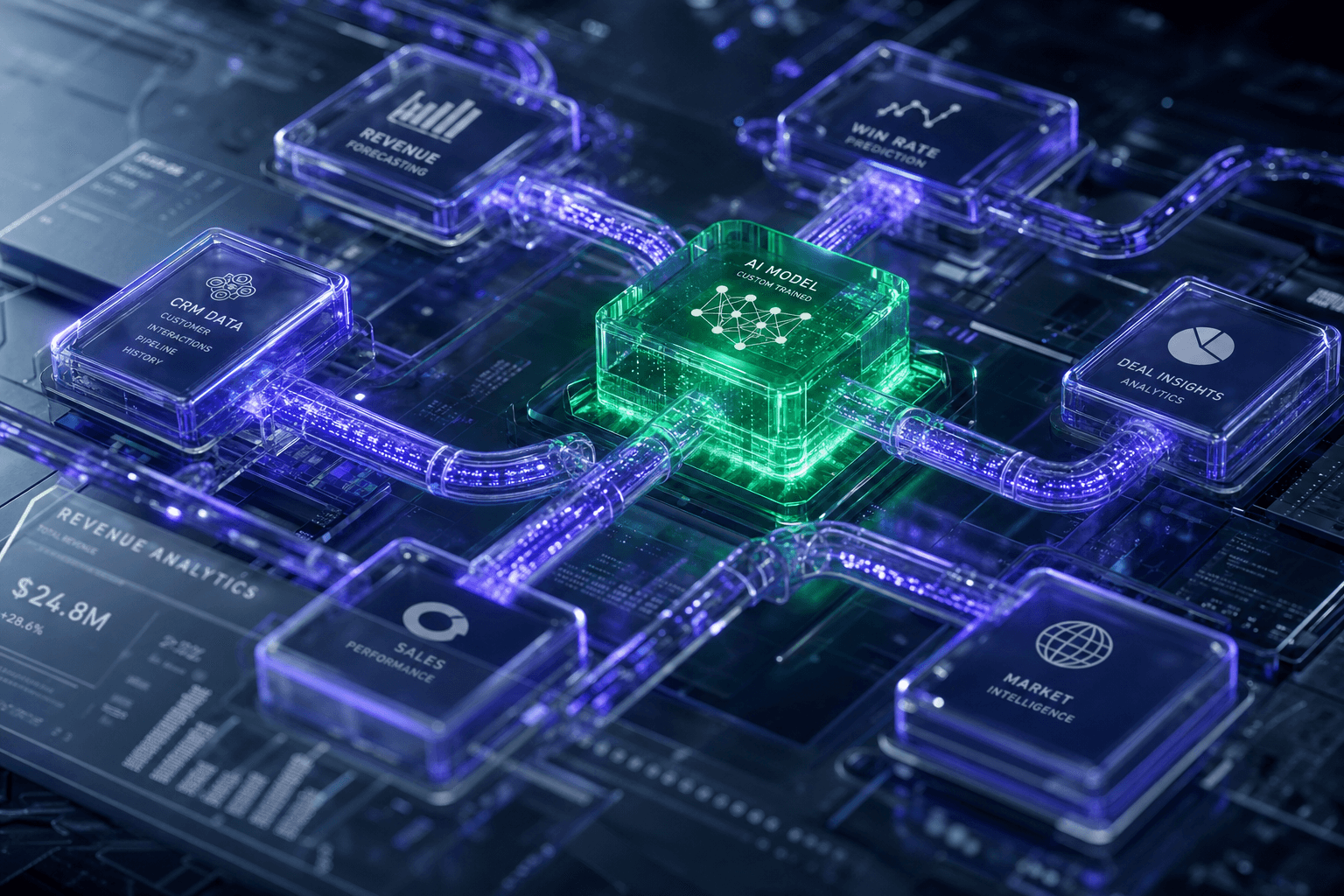
Why generic AI systems fail revenue operations data
Why off-the-shelf AI systems fail at RevOps data quality and what custom-trained models deliver instead.