
Architecting a centralised enterprise knowledge graph: Eliminating data silos and enabling intelligent operations
How a unified knowledge graph cuts IT integration costs and powers real-time decisions across fragmented enterprise systems.
Key Takeaways
- Fragmented data systems create hidden costs through manual reconciliation and block real-time operational intelligence.
- A centralised knowledge graph replaces data silos with semantic relationships that connect every entity across your business.
- Graph databases enable dynamic querying and AI deployment without vendor lock-in or expensive custom integrations.
- Real-time insights and improved data quality deliver measurable ROI through faster decisions and reduced IT debt.
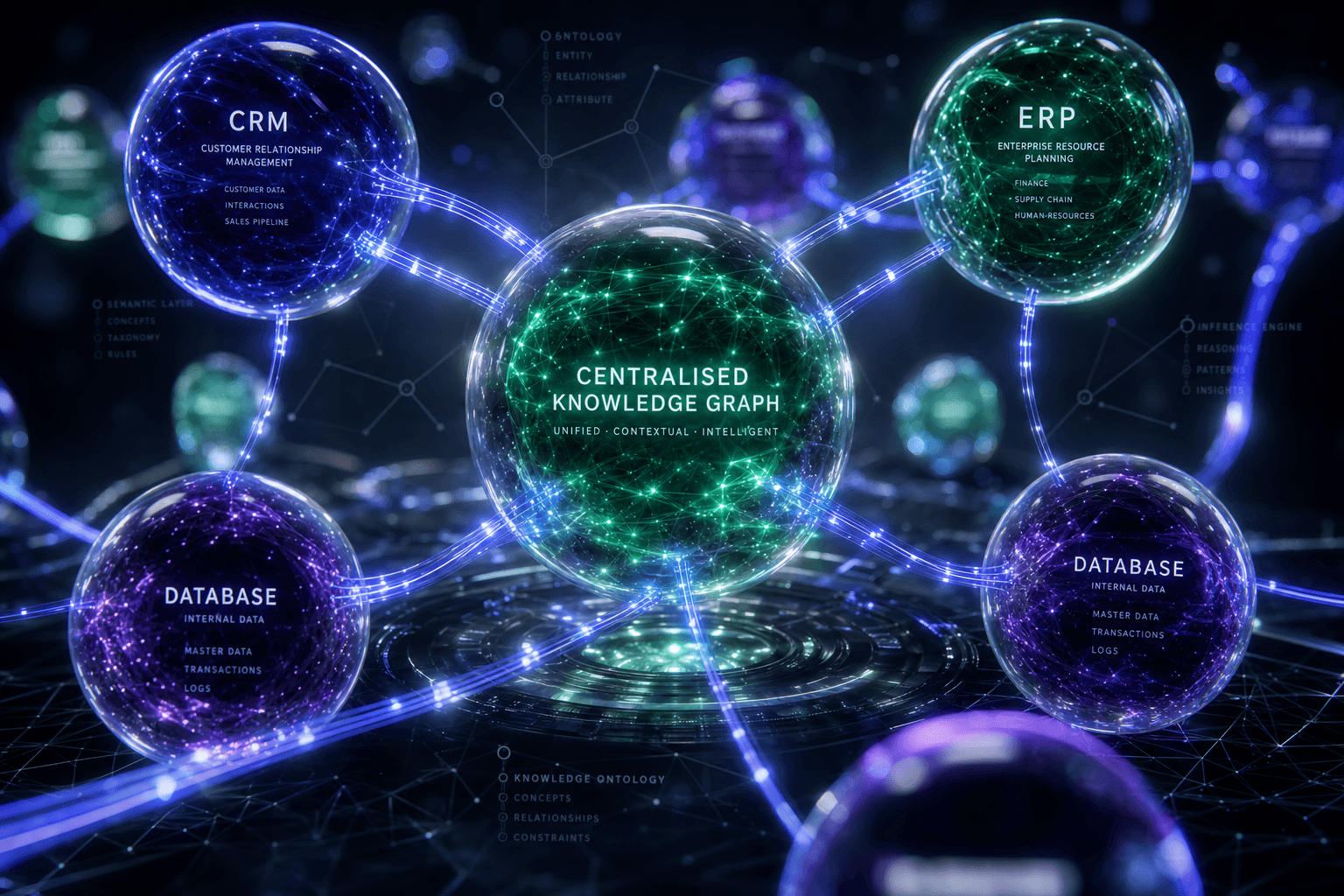
Your enterprise data lives in silos. Customer records sit in your CRM, financial data hides in your ERP, and project information lives somewhere else entirely. This fragmentation costs you speed, accuracy, and the ability to build intelligent systems that actually understand your business.
Meta Description: Fragmented data creates a hidden drag on operations and limits AI potential. A centralised enterprise knowledge graph delivers real-time insights, reduces IT debt, and builds a foundation for intelligent automation at scale.
The fragmented data problem killing your operational efficiency
Your CTO team battles the same issue daily: critical business intelligence sits locked in disconnected systems. Customer data lives in your CRM. Financial records hide in your ERP. Product information scatters across internal databases.
This fragmentation creates serious operational drag. Your teams duplicate effort. Reports contradict each other. Manual data reconciliation burns resources you can't spare. Decision-making slows to a crawl.
The real cost? You can't see the complete picture of your enterprise operations or customer interactions. Advanced AI applications remain out of reach because your data can't connect the dots between related entities.
Build a semantic layer that unifies your enterprise data
Stop treating data silos as inevitable. A centralised enterprise knowledge graph shifts your foundation from isolated databases to a semantic layer that maps relationships between entities across your entire organization.
This graph-based architecture creates true data interoperability. Information from diverse sources gains context. You establish a single source of truth for operational intelligence.
The technical advantage: dynamic querying and advanced analytics without vendor lock-in. Your AI applications become context-aware. Your systems speak the same language.
Execute the knowledge graph implementation
Map your core entities and relationships
Start by defining key business concepts: customers, products, projects, employees. Document how they interact. Build a robust ontological model that reflects actual business operations, not theoretical structures.
Deploy a scalable graph database layer
Select a graph database that matches your scale requirements—Neo4j, Amazon Neptune, or similar platforms. Connect it to existing data sources through ETL processes or API integrations. Your existing systems don't need replacement; they need connection.
Build semantic integration pipelines
Create automated data pipelines that pull from operational systems: CRM, ERP, marketing automation platforms. These pipelines must clean data, harmonize formats, and enrich entries with semantic links and metadata. Automation removes the manual reconciliation burden.
The measurable business impact
Real-time operational insights become standard. IT debt from fragmented data integration drops measurably. Data quality improves across the board.
Your decision-making accelerates. Customer experiences improve because teams access complete context. The foundation for intelligent automation and AI deployment at scale becomes solid and dependable.
The ROI shows in reduced operational friction, faster time-to-insight, and the ability to deploy sophisticated AI applications that actually understand your business context.
Related reading:
Want more on
Business Operations?
Add this topic to your Custom Digest. Drop your email to get our deepest insights on this exact topic.
Ready to fast-track your business?
We combine enterprise-level technical strategy with your existing business to solve complex blockers and accelerate your growth. Let's build something remarkable.
Partner With UsUp Next
Continue your journey into Business Operations.
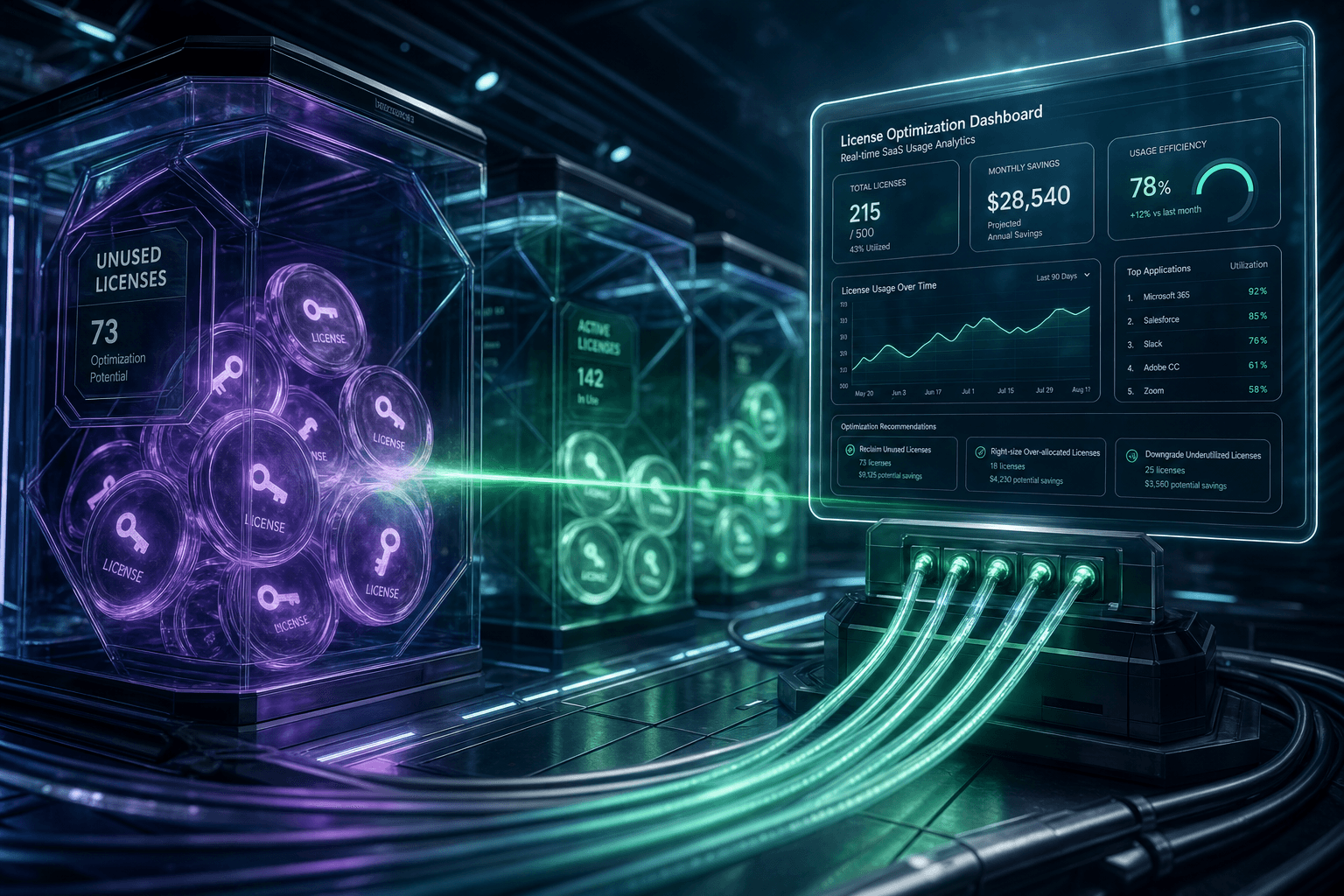
Modernizing framework for continuous licence optimisation
A practical framework for finance teams to eliminate unused SaaS licences and cut recurring software costs through continuous monitoring.
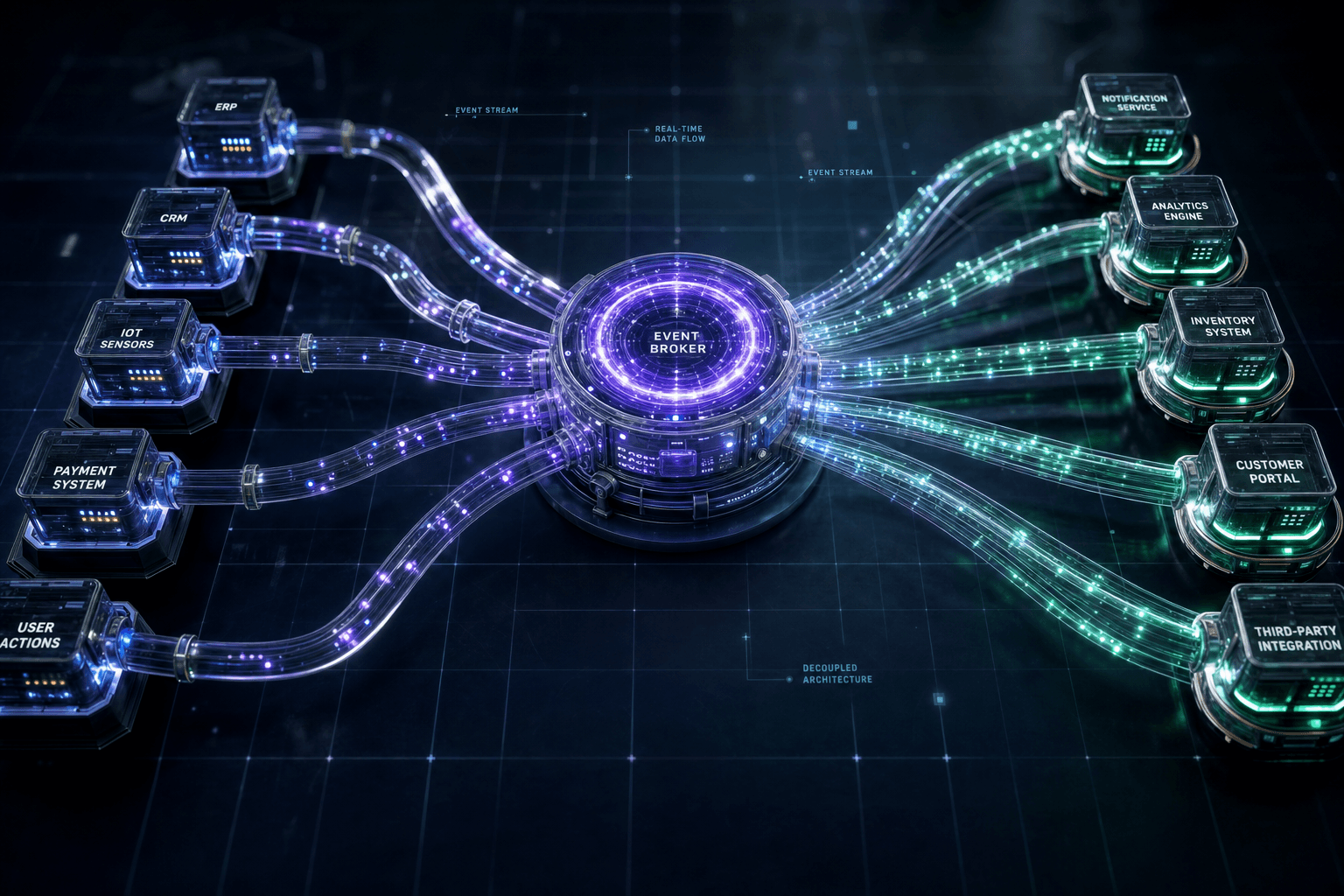
Accelerating enterprise integration with event-driven data flows
Move data between systems in seconds, not hours, by replacing brittle point-to-point integrations with event-driven architecture.

Streamlining enterprise SaaS sprawl with rationalized technology portfolios
Cut SaaS costs by 25% and close security gaps by rationalising your enterprise technology portfolio.