
The hidden costs of integration debt: Architecting for opex reduction with event-driven data fabrics
How event-driven integration cuts operational costs by eliminating technical debt and reducing manual IT overhead.

Key Takeaways
- Integration debt silently inflates your OpEx through maintenance overhead, manual fixes, and specialist IT resources.
- Event-driven data fabrics decouple systems through asynchronous communication, eliminating brittle point-to-point connections and technical debt.
- Standardised event schemas and data contracts reduce parsing complexity and streamline maintenance across your entire IT estate.
- Migrating high-cost integrations to event patterns cuts TCO, improves audit readiness, and frees finance teams from data delays.
Most CFOs track software licensing costs, but they miss the real killer: integration debt. Your organisation is bleeding OpEx on manual patching, dedicated headcount, and constant firefighting across fragile point-to-point connections. Event-driven data fabrics cut this waste by decoupling systems and eliminating the maintenance overhead that silently erodes your margins.
Your procurement team sees the invoice for another enterprise SaaS license. They flag the line item, negotiate the price down, and call it a win.
What they don't see is the $400,000 in annual operational expenditure buried in maintaining the point-to-point integrations connecting that system to your ERP, CRM, and data warehouse.
That's integration debt. And it's bleeding your organization dry.
The real price of point-to-point integration
Most enterprise IT landscapes look like spaghetti. Each system connects to three, five, or ten others through custom APIs, scheduled batch jobs, and brittle middleware scripts. Every new application multiplies the complexity exponentially.
This creates four hidden cost centers that rarely show up on a CFO's dashboard:
Manual intervention overhead: Each integration failure requires a developer or IT operations engineer to diagnose the issue, locate the failing connection, patch the code, and verify data integrity. These incidents consume 15-30 hours of specialist time per month, per critical integration.
Technical debt accumulation: Point-to-point connections are written for specific versions of specific systems. When one system updates, the integration breaks. The code becomes a legacy artifact that nobody wants to touch. Teams build workarounds instead of fixing the root cause, compounding the problem.
Data quality erosion: When systems communicate through custom scripts, data validation happens inconsistently. Fields get mapped incorrectly. Timestamps drift. Your RevOps team makes decisions on revenue projections that are 14 days stale because the nightly batch job keeps failing.
Audit and compliance risk: When regulators ask for data lineage, you can't produce it. The financial reporting trail passes through six custom integrations with no centralized logging. Your auditors charge premium rates to untangle the mess. Your compliance team lives in constant fear of what they can't see.
The total cost of ownership for these integrations dwarfs the licensing fees that procurement negotiates. Yet most finance teams have no visibility into the problem.
The architectural shift: Event-driven data fabrics
An event-driven architecture flips the integration model. Instead of building custom point-to-point connections, systems publish events to a central streaming platform when data changes. Other systems subscribe to those events and react accordingly.
This decouples your systems. The CRM doesn't need to know that the ERP, data warehouse, and billing system all need customer updates. It publishes a "customer.updated" event. Subscribers consume it independently.
Three architectural principles drive the cost reduction:
Single-source event publication: Each system publishes its state changes once. Multiple consumers read from the event stream without any additional load on the source system. This eliminates redundant API calls and reduces compute costs.
Asynchronous communication: Systems don't wait for synchronous responses. They process events when ready, which smooths out load spikes and reduces the need for over-provisioned infrastructure.
Standardized data contracts: Events follow a common schema (Avro, Protobuf, JSON Schema). When systems speak the same language, you eliminate the custom parsing logic that creates 70% of integration bugs.
The result is a resilient data fabric that scales without linear cost increases. Adding a new system means subscribing to existing events, not building ten new custom integrations.
The blueprint for opex reduction
Step 1: Audit your integration landscape
Before you refactor anything, you need to know what you have.
Catalog every integration in your enterprise. Document:
- Source and target systems
- Data flow direction and frequency
- Business criticality (revenue-impacting, compliance-required, operational support)
- Failure rate and mean time to repair
- Engineering hours spent on maintenance per quarter
Rank integrations by maintenance cost and business risk. The top 20% of integrations typically account for 80% of your operational pain.
This audit reveals the quick wins. You'll find redundant connections where three different teams built three different integrations between the same two systems. You'll find zombie integrations that nobody uses but still consume resources. You'll find critical paths with no monitoring or alerting.
Step 2: Design your event streaming platform
Your event-driven fabric needs a backbone. Choose a streaming platform based on your scale, latency requirements, and cloud strategy:
- Apache Kafka for high-throughput, low-latency scenarios with complex stream processing requirements
- AWS Kinesis for AWS-native deployments with tight integration to Lambda and analytics services
- Azure Event Hubs for Azure-centric enterprises with existing Microsoft enterprise agreements
- Google Cloud Pub/Sub for GCP environments requiring global message distribution
The platform choice matters less than the architectural discipline. Define:
Event naming conventions: Use a clear taxonomy (e.g., "domain.entity.action" like "crm.customer.updated"). Consistency prevents integration errors.
Schema governance: Implement a schema registry. Every event type gets a versioned schema. Breaking changes require a new version. This prevents the schema drift that kills data quality.
Retention policies: Determine how long events stay in the stream. Balance replay capability (for debugging and new consumer onboarding) against storage costs.
Access control: Define who can publish and subscribe to which event types. Treat your event fabric like you treat your database: strict permissions, audit logging, and principle of least privilege.
This design work happens once. The payoff lasts for years.
Step 3: Migrate high-cost integrations to event patterns
Don't attempt a big-bang migration. That's how projects fail.
Start with the integrations that bleed the most OpEx. Your audit from step one identified them. Migrate in phases:
Phase 1: Parallel operation
Build the event-driven version while keeping the legacy integration running. Publish events from the source system without removing the old API calls. Subscribe to events in the target system but validate against the old data flow.
This parallel operation proves the architecture works before you commit. You catch data quality issues early. You build confidence with stakeholders who fear change.
Phase 2: Cutover with rollback plan
Once the event-driven flow runs cleanly for two weeks, cut over. Disable the legacy integration. Monitor intensively for 72 hours.
Have a rollback plan. Document exactly how to re-enable the old integration if something breaks. This isn't pessimism. It's operational discipline.
Phase 3: Decommission and document
After 30 days of stable operation, decommission the legacy integration. Delete the code. Remove the cron jobs. Update the documentation.
This step matters. Legacy code that "might be useful someday" costs money. It confuses new engineers. It creates security vulnerabilities. Kill it.
Step 4: Implement observability and monitoring
Event-driven systems fail differently than point-to-point integrations. You need different monitoring:
Event lag monitoring: Track the time between event publication and consumption. Lag spikes indicate consumer problems or capacity constraints.
Schema validation errors: Alert when consumers receive events they can't parse. This catches breaking changes and schema registry failures.
Dead-letter queues: Route failed events to a dead-letter queue for analysis. Don't let them disappear. Failed events represent data loss or business process failures.
End-to-end tracing: Implement correlation IDs that flow through the entire event chain. When a financial report shows wrong numbers, you trace backward through every system that touched the data.
Good observability prevents small issues from becoming expensive incidents.
The financial outcome
Organizations that execute this transition see measurable OpEx reduction within six months:
50-70% reduction in integration maintenance hours: Event-driven systems break less often. When they do break, the problem is isolated to one consumer, not a tangled web of dependencies.
30-40% faster time-to-integrate for new systems: Adding a new system means subscribing to existing events, not building custom integrations from scratch. This accelerates M&A integration and vendor changes.
Improved data quality and audit readiness: Centralized event logging gives you complete data lineage. Auditors spend less time investigating. Compliance teams sleep better.
Freed IT capacity for strategic work: When your senior engineers stop fighting integration fires, they can work on projects that grow revenue. That's the real ROI.
The upfront investment in building the event fabric pays back in 12-18 months for most enterprises. After that, it's pure cost avoidance and capability acceleration.
The risk of inaction
Integration debt compounds like financial debt. Every new system you add makes the problem worse. Every custom integration you build increases the maintenance burden.
The organizations that win are the ones that stop the bleeding now. They invest in the architectural shift before the problem becomes unsolvable.
Your CFO is looking for OpEx reduction. Your CTO is looking for technical debt reduction. Your auditors are looking for data lineage.
An event-driven data fabric solves all three problems at once.
The question isn't whether to make this shift. The question is whether you do it proactively or wait until a compliance failure forces your hand.
Related Reading:
- Beyond SaaS Bloat
- Architecting a centralised enterprise knowledge graph | Blogpost | The WrightyMedia Agency
- Beyond the Dashboard: How Enterprise CTOs Can Leverage Next.js and AI-Powered Automation (Make/n8n) to Unify Business Operations and Drive Predictable Growth | Blogpost | The WrightyMedia Agency
Want more on
Business Operations?
Add this topic to your Custom Digest. Drop your email to get our deepest insights on this exact topic.
Ready to fast-track your business?
We combine enterprise-level technical strategy with your existing business to solve complex blockers and accelerate your growth. Let's build something remarkable.
Partner With UsUp Next
Continue your journey into Business Operations.
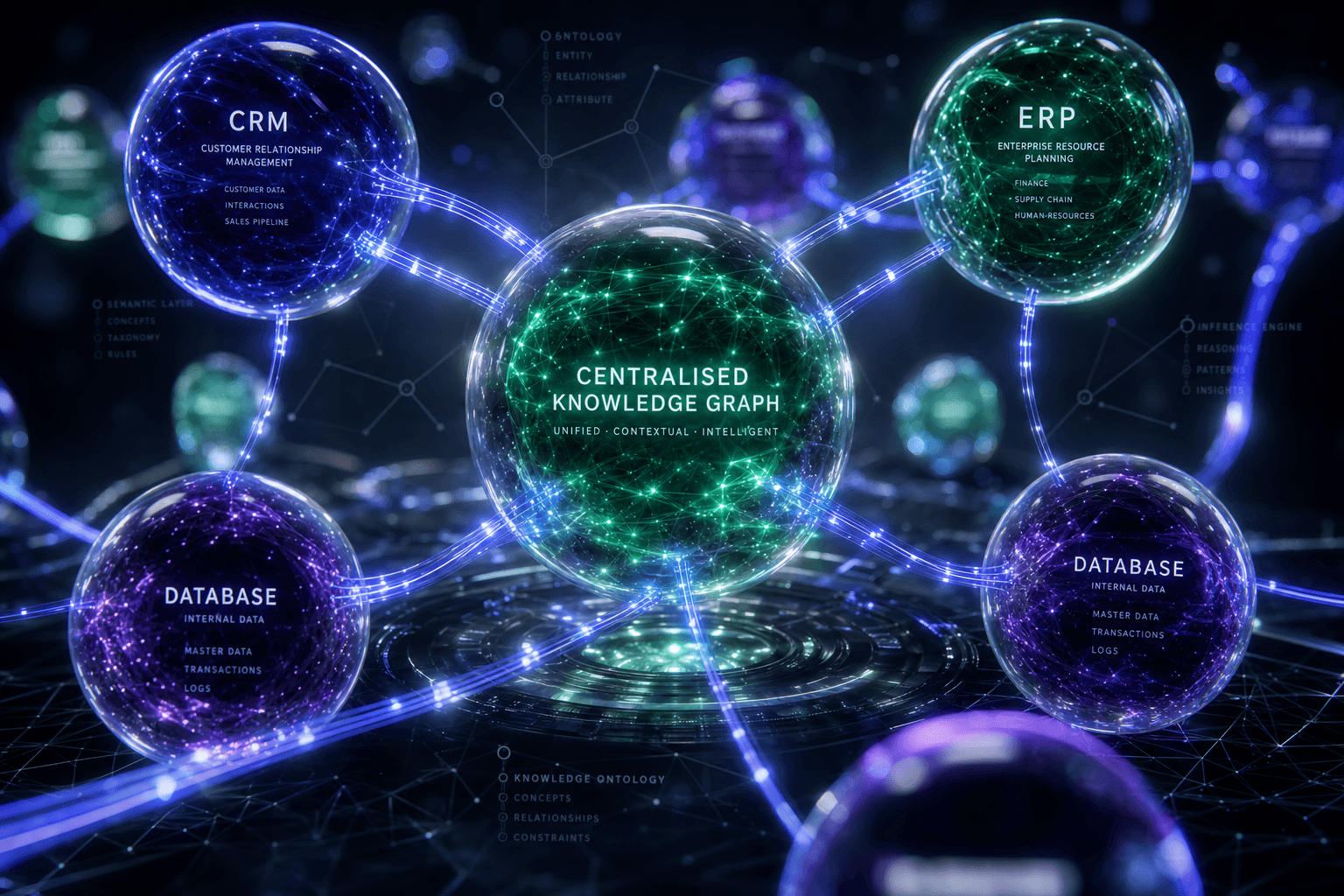
Designing centralised enterprise knowledge graph
How a unified knowledge graph cuts IT integration costs and powers real-time decisions across fragmented enterprise systems.
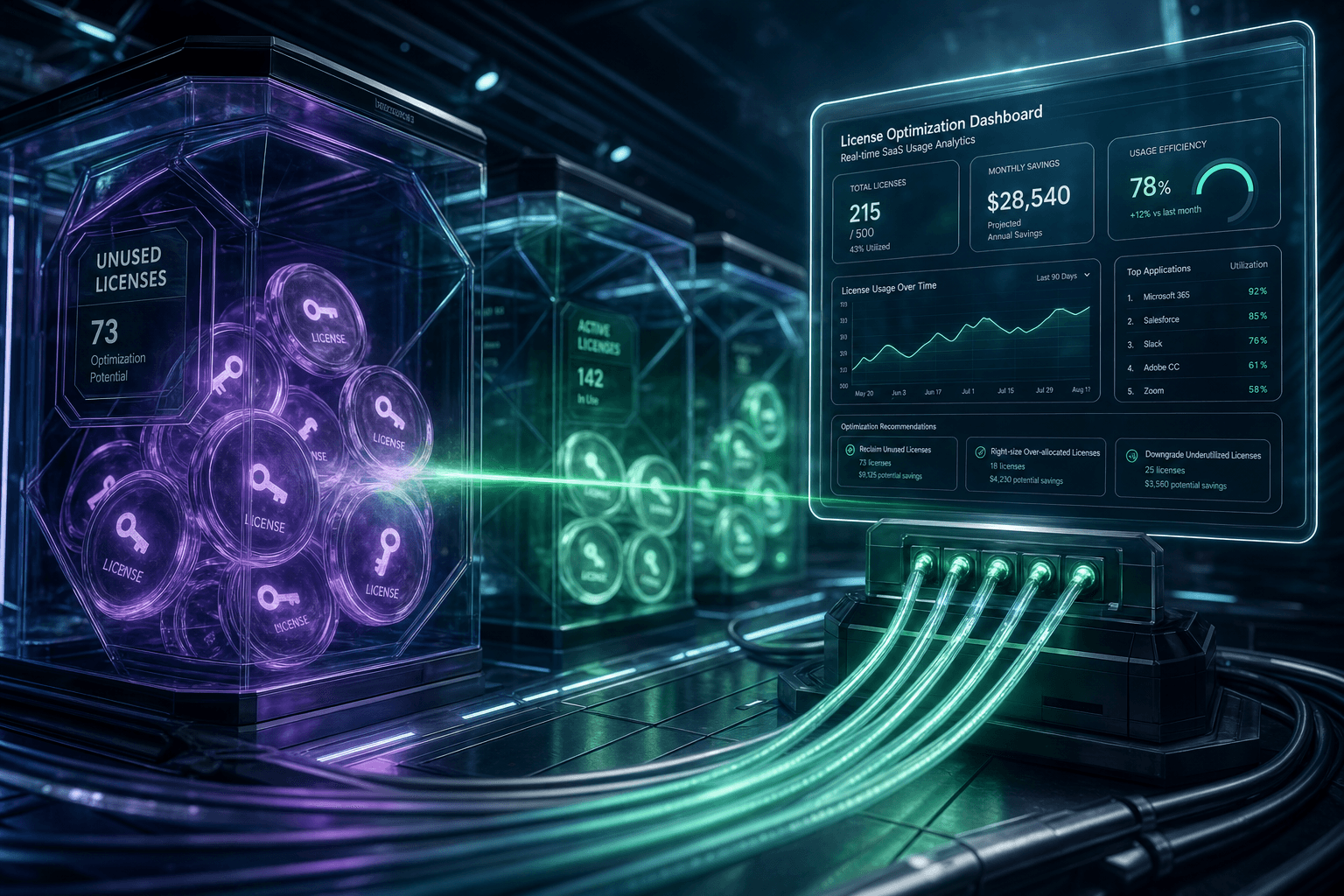
Modernizing framework for continuous licence optimisation
A practical framework for finance teams to eliminate unused SaaS licences and cut recurring software costs through continuous monitoring.
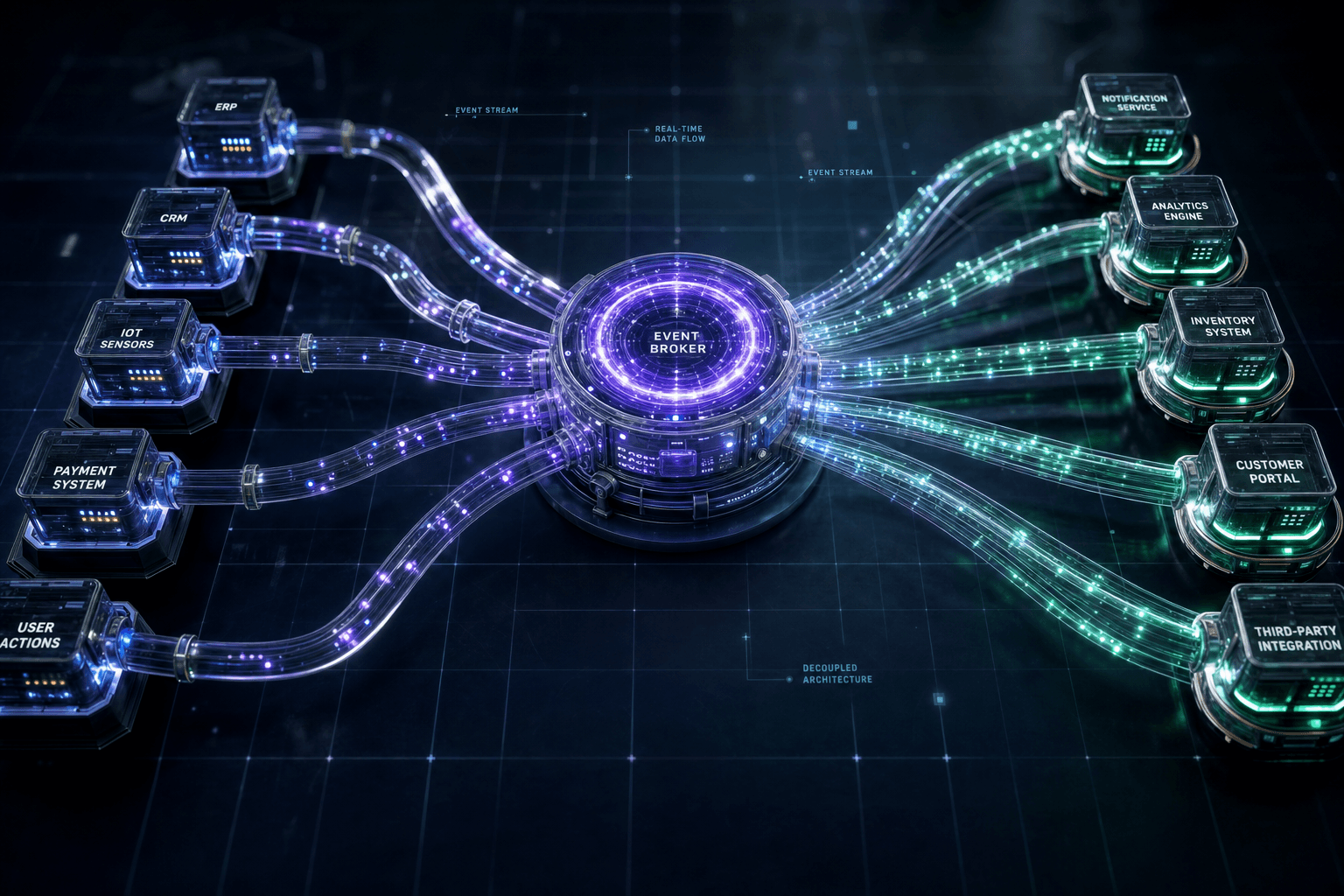
Accelerating enterprise integration with event-driven data flows
Move data between systems in seconds, not hours, by replacing brittle point-to-point integrations with event-driven architecture.